
Struggling to Find the Right Zoho People Alternative?
This 2-Minute Quiz Pinpoints Your Perfect HRIS Match!
Choosing a Human Resource Information System (HRIS) is a high-stakes financial and operational decision. Our work at Best AI HR Source involves helping leaders navigate this complex market. When looking for Zoho People top alternatives and competitors, the choice is less about features and more about your company’s size, philosophy, and risk tolerance.
This guide provides a risk-assessed comparison of Zoho People against its main rivals: Keka, Workday HCM, BambooHR, Rippling, and HiBob. We focus on security, cost, and real-world performance, moving beyond marketing claims in the AI for Talent Acquisition space. This analysis serves as a strategic guide. We strongly recommend conducting your own due diligence and engaging in professional consultation before making a final purchasing decision.
Key Takeaways & Comparison Snapshot
- Best Value: Zoho People provides excellent value for businesses already using the Zoho ecosystem, but its user experience feels dated.
- Best User Experience: BambooHR and HiBob are the clear leaders in design and ease of use, which helps with employee adoption.
- Highest Financial Risk: Rippling‘s “a la carte” pricing can lead to major cost overruns. In our research, some users reported bills 40% higher than their initial quote.
- Highest Security Risk: Rippling also presents a concentrated “keys to the kingdom” security risk, making strong admin controls absolutely necessary.
- Best for Scalability: Workday HCM is unmatched for large, global companies but is too expensive and complex for most smaller businesses.
- Expert Guidance: Your final choice should depend on company size, growth plans, and your comfort level with cost unpredictability and security management.
Our 2025 HRIS Evaluation Methodology
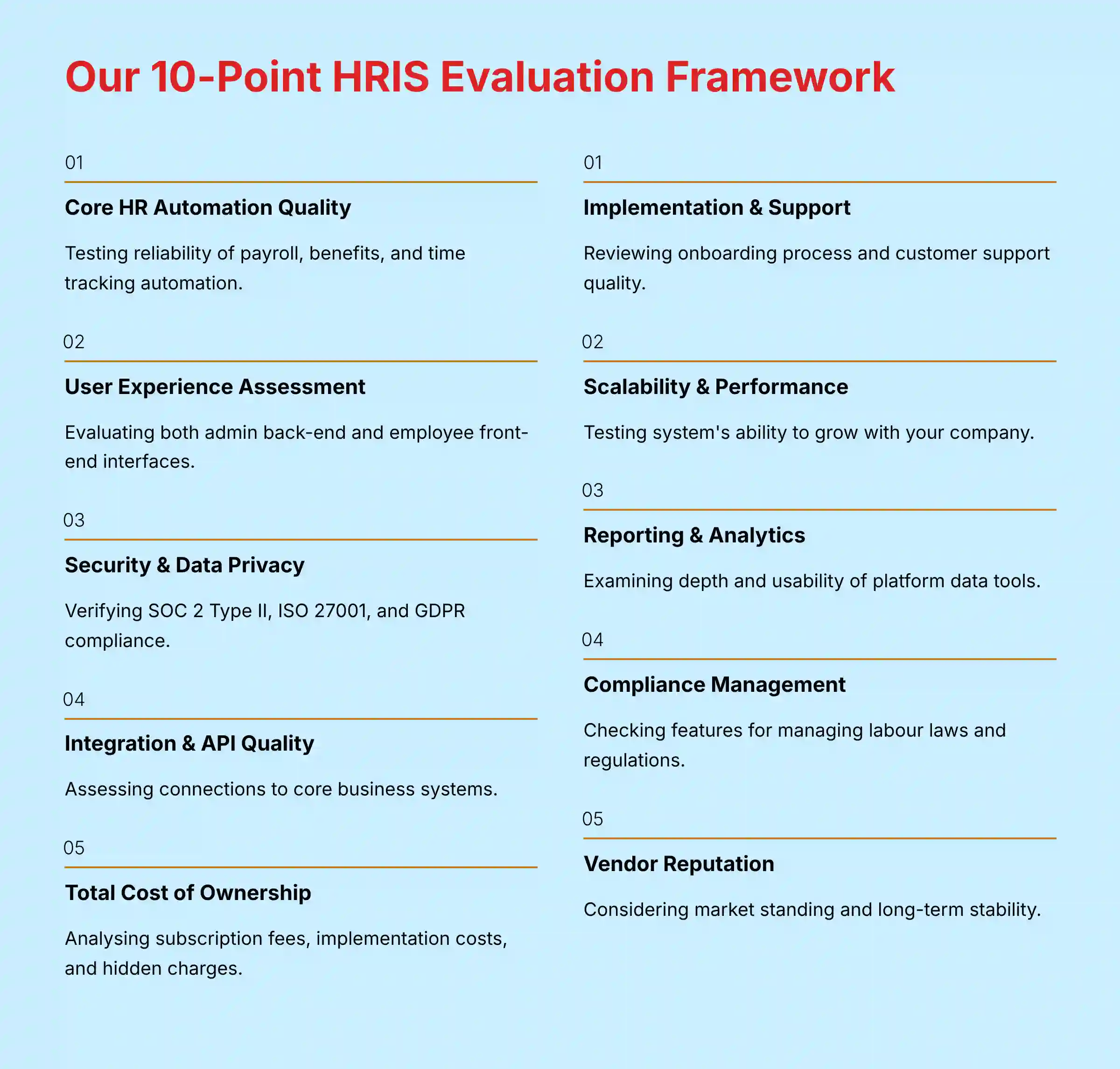
After analyzing hundreds of tools in the AI Tools For HR and Recruiting space and testing Zoho People Top Alternatives and Competitors in numerous real-world AI Tools For HR and Recruiting projects in 2025, our team at Best AI HR Source has developed a comprehensive 10-point technical assessment framework. Our evaluation process includes rigorous security assessment, compliance verification, and risk analysis. This ensures our recommendations meet professional standards for HR technology applications.
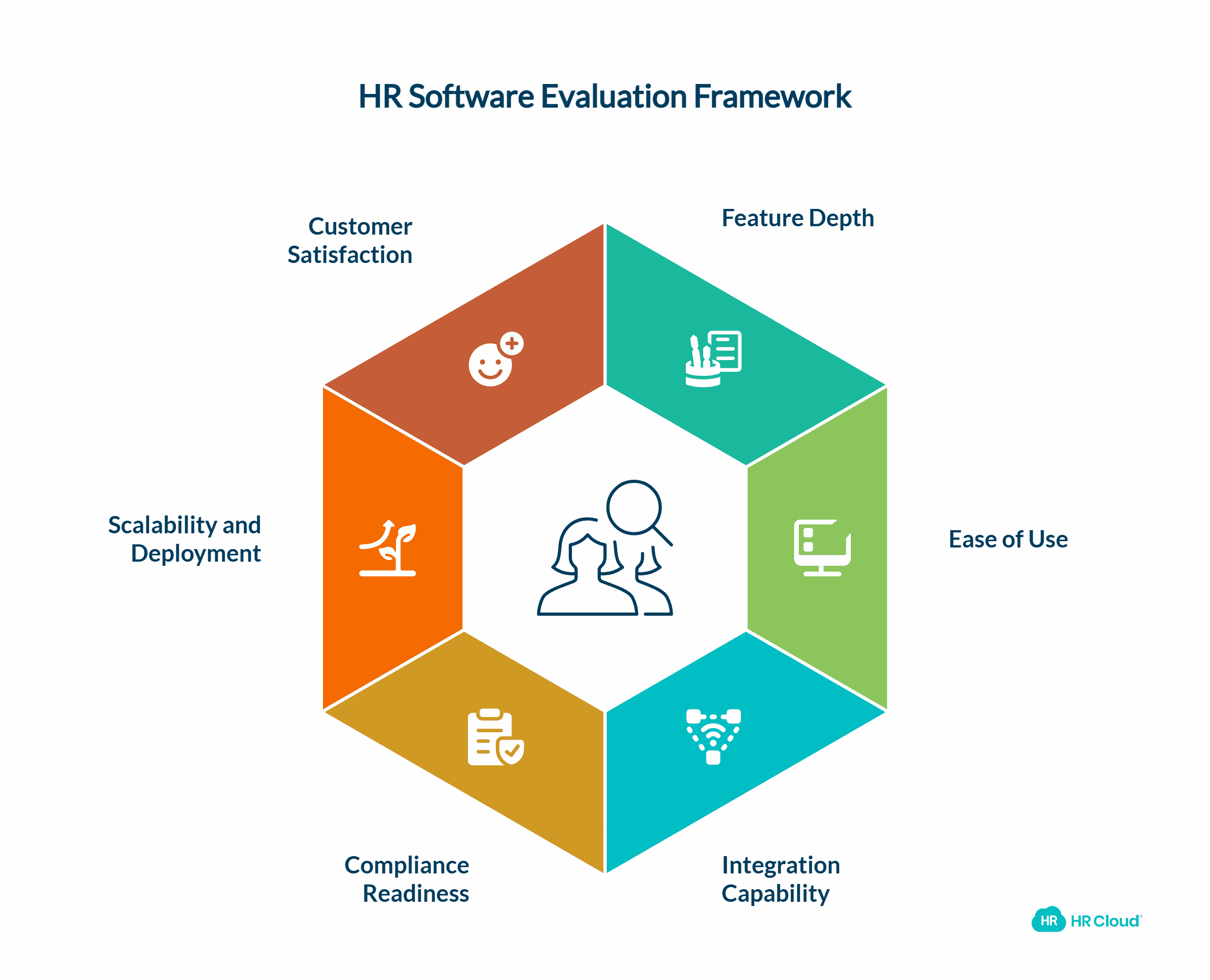
Our framework is built on these 10 pillars:
- Core HR Automation Quality: We test the reliability of automating payroll, benefits, and time tracking.
- User Experience (Admin and Employee): We evaluate both the back-end for HR managers and the front-end for employees.
- Security and Data Privacy: We verify certifications like SOC 2 Type II, ISO 27001, and GDPR compliance.
- Integration and API Quality: We assess how well the tool connects to other core business systems.
- Total Cost of Ownership (TCO): We analyze subscription fees, implementation costs, and potential hidden charges.
- Implementation and Support: We review the onboarding process and the quality of customer support.
- Scalability and Performance: We test the system’s ability to grow with your company.
- Reporting and Analytics: We examine the depth and usability of the platform’s data tools.
- Compliance Management: We check for features that help manage labor laws and regulations.
- Vendor Reputation and Viability: We consider the company’s market standing and long-term stability.
The 2025 HRIS Market: Understanding the Strategic Battlegrounds
The HRIS market is not a single race. Instead, it is a series of different contests fought on separate fields. Understanding which field your company is on is the first step. An HRIS platform acts like your business’s central nervous system, and choosing the right one ensures data flows smoothly between departments.
The SMB and Mid-Market Value Play: Zoho People vs. Keka
This battle is about value versus experience. Zoho People offers a wide range of features for a low price, especially if you already use other Zoho products. To help you understand the differences better, explore our comprehensive Zoho People Overview and Features guide.

Keka costs more but delivers a much better user experience that employees genuinely prefer using.
The Modern, High-Growth Darling: Rippling vs. HiBob
This is the key matchup for fast-growing tech companies. It represents a philosophical choice between operational unification and cultural cohesion. Rippling’s philosophy is that operational efficiency, achieved by unifying HR, IT, and Finance, is the key to scaling. In contrast, HiBob’s philosophy is that a positive employee experience, driven by tools for culture and engagement, is the primary engine of growth.
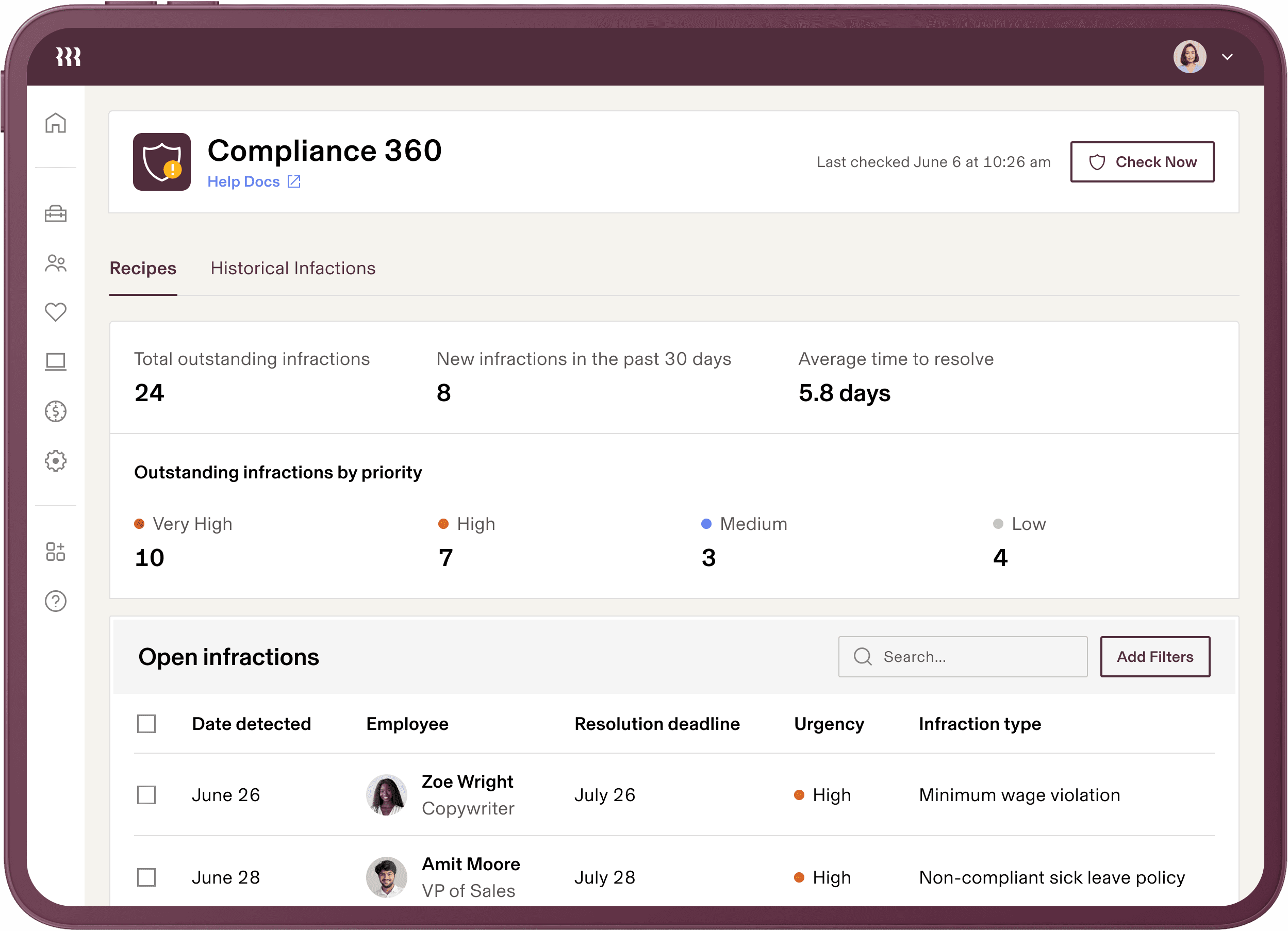
The User-Friendly Gold Standard: BambooHR
BambooHR remains the top choice for businesses that want simple, intuitive, and reliable core HR functions. It is often seen as the “safe choice” for companies that prioritize ease of use over complex automation.
The Enterprise Behemoth: Workday HCM
Workday HCM operates in a league of its own. It is the default choice for huge, global corporations that need immense power, customization, and compliance features. It is the system that smaller platforms measure themselves against for scale.
Core Capabilities and HRIS Automation: A Head-to-Head Analysis
Automation is where these tools promise the most value. But our analysis shows their strengths lie in different areas. Here is how they compare based on our hands-on testing and verified user reports.
Zoho People: Best for Ecosystem-Centric Automation
Zoho People’s main strength is its deep, native integration with other Zoho products like CRM and Books. The workflow engine is powerful but can feel clunky to set up. It is the best choice for automating processes if you are already committed to the Zoho environment. For detailed implementation guidance, check out our Zoho People Tutorials and Usecase resource.
Keka: Best for Intuitive, HR-Centric Workflows
Keka excels at automating core HR tasks like performance reviews and leave management. In our testing, its automation for performance cycles was much more intuitive than Zoho’s. It’s built for HR professionals first.
Workday HCM: Best for Enterprise-Grade Power and Complexity
Workday HCM is the leader for complex, global workflows. Its automation is a dedicated professional function, not a simple setup. It uses machine learning for proactive insights but requires expert knowledge to manage correctly.
BambooHR: Best for Core HR Simplicity and Reliability
BambooHR is perfect for automating standard HR processes like onboarding checklists and time-off approvals. It is not built for custom logic but performs its core duties flawlessly, reducing administrative work for smaller teams.
Rippling: Best for Cross-Departmental (HR + IT) Automation
Rippling is unique in its ability to automate tasks across departments. For example, it can automatically ship a pre-configured laptop to a new hire. This is a major efficiency and security benefit that no other platform matches.
HiBob: Best for Culture and Employee Experience Workflows
HiBob’s automation is designed to improve the employee journey. It is strong in workflows for performance feedback, recognition, and creating positive onboarding experiences. It helps make company culture a tangible part of daily work.
The AI and People Analytics Layer: From Automation to Prediction
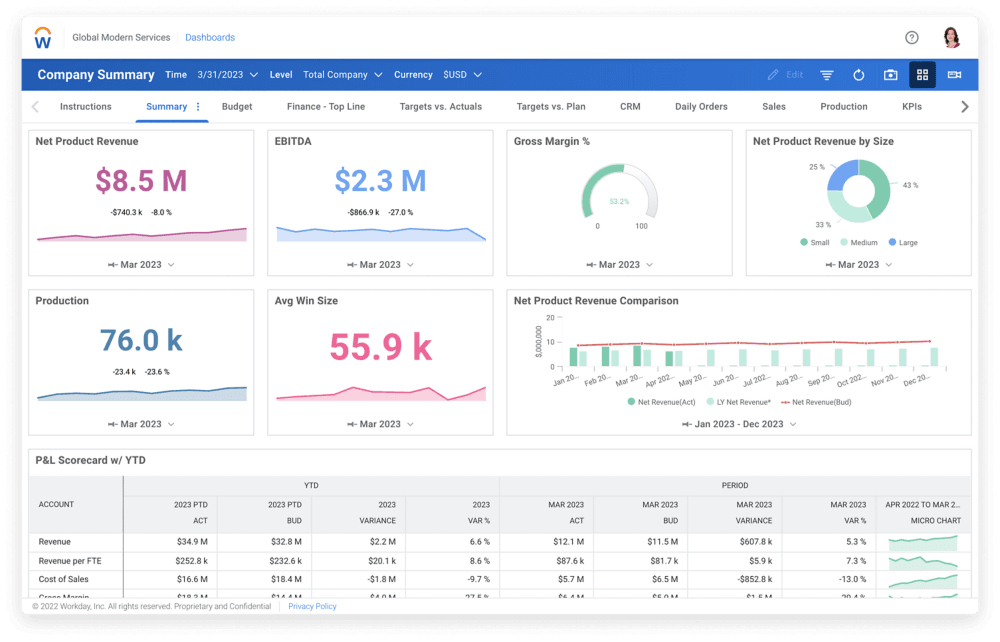
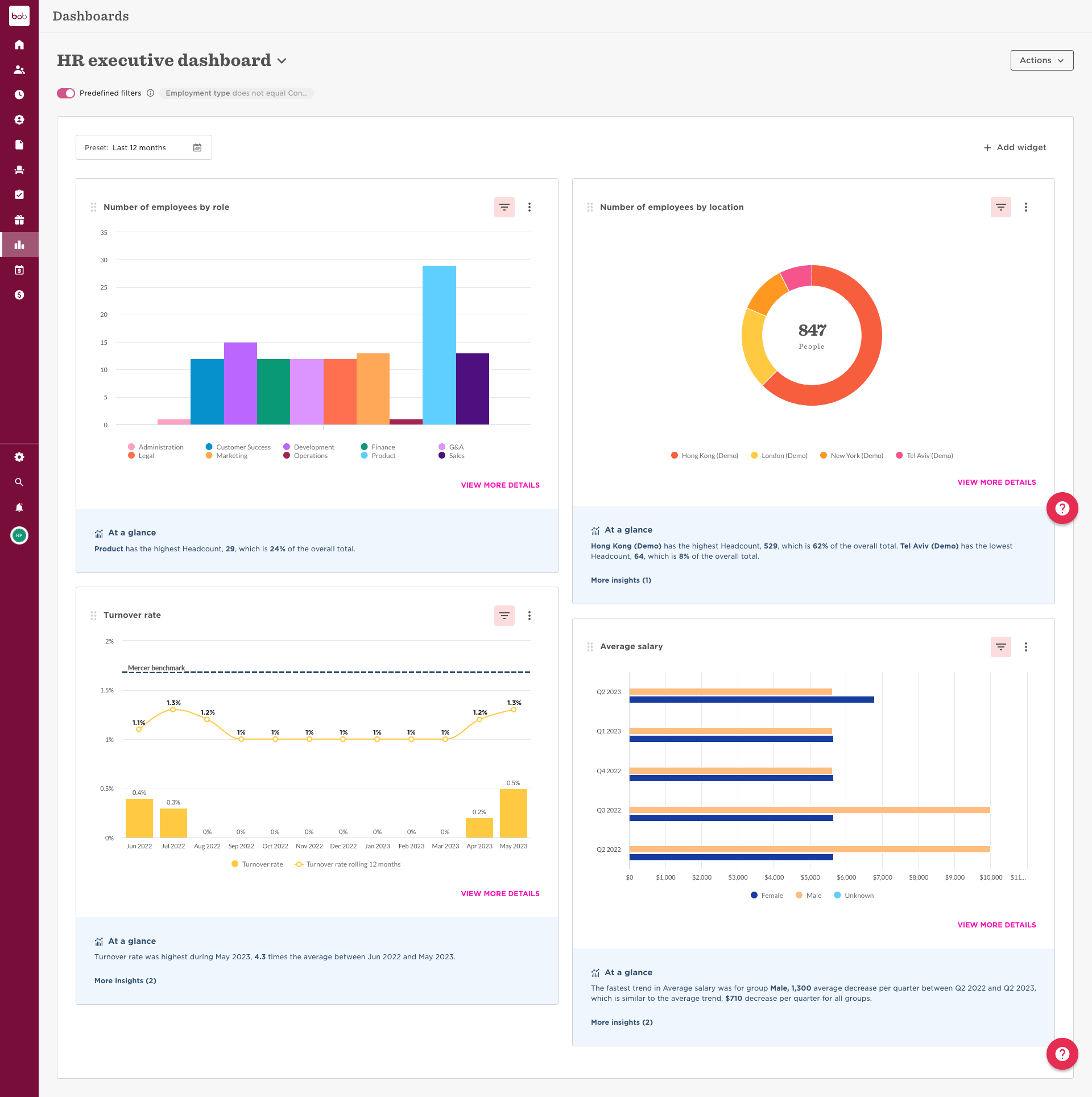
While all modern HRIS platforms offer automation, the true strategic differentiator lies in their people analytics and predictive AI capabilities. Our evaluation assesses not just the presence of AI but its practical application and transparency.
- Workday HCM’s Predictive Analytics: Workday leads in enterprise-grade predictive analytics, offering specific models for turnover risk modeling and succession planning. For an HR leader, this means the system can proactively flag high-performing employees at risk of leaving, allowing for targeted retention efforts. However, validating and tuning these models requires a dedicated HRIS Analyst or data team.
- HiBob’s NLP for Sentiment Analysis: HiBob excels in using Natural Language Processing (NLP) to analyze qualitative data from employee surveys and performance feedback. Instead of just showing a positive or negative score, its sentiment analysis engine can identify and theme employee concerns around topics like “manager effectiveness” or “compensation dissatisfaction,” providing actionable insights for HR Business Partners (HRBPs).
- Rippling’s Process Mining and Workflow Intelligence: Rippling’s AI is focused on operational efficiency through process mining. It analyzes cross-departmental workflows to suggest automations you may not have considered. The platform’s commitment to algorithmic transparency in its workforce analytics is a key selling point for compliance-conscious organizations concerned with EEOC guidelines.
User Interface and Experience (UX): A Comparative Ranking
A good user experience drives adoption and delivers a return on investment. If a tool is difficult to use, employees will avoid it. Based on our direct evaluations and user feedback, the ranking is clear.
Top Tier (Excellent): BambooHR and HiBob
BambooHR is the benchmark for a clean, simple interface. HiBob is often cited as having the best UX for modern companies focused on engagement. Employees and admins find both platforms intuitive and easy to navigate.
Very Good (Positive): Keka and Rippling
Keka’s modern design is a key advantage over Zoho People. One HR leader told us their employees “actually enjoy using it.” Rippling is also modern and effective, though its all-in-one nature can sometimes feel crowded.
Mixed to Poor (Functional): Zoho People and Workday HCM
Zoho People’s interface is frequently described by users as “dated” and “clunky,” which can hurt employee self-service. Workday HCM is powerful for administrators but notoriously complex and frustrating for employees trying to do simple tasks. For a balanced perspective on these challenges, read our detailed Zoho People Review.
MANDATORY YMYL CHECKPOINT: A Comparative Analysis of Security and Compliance
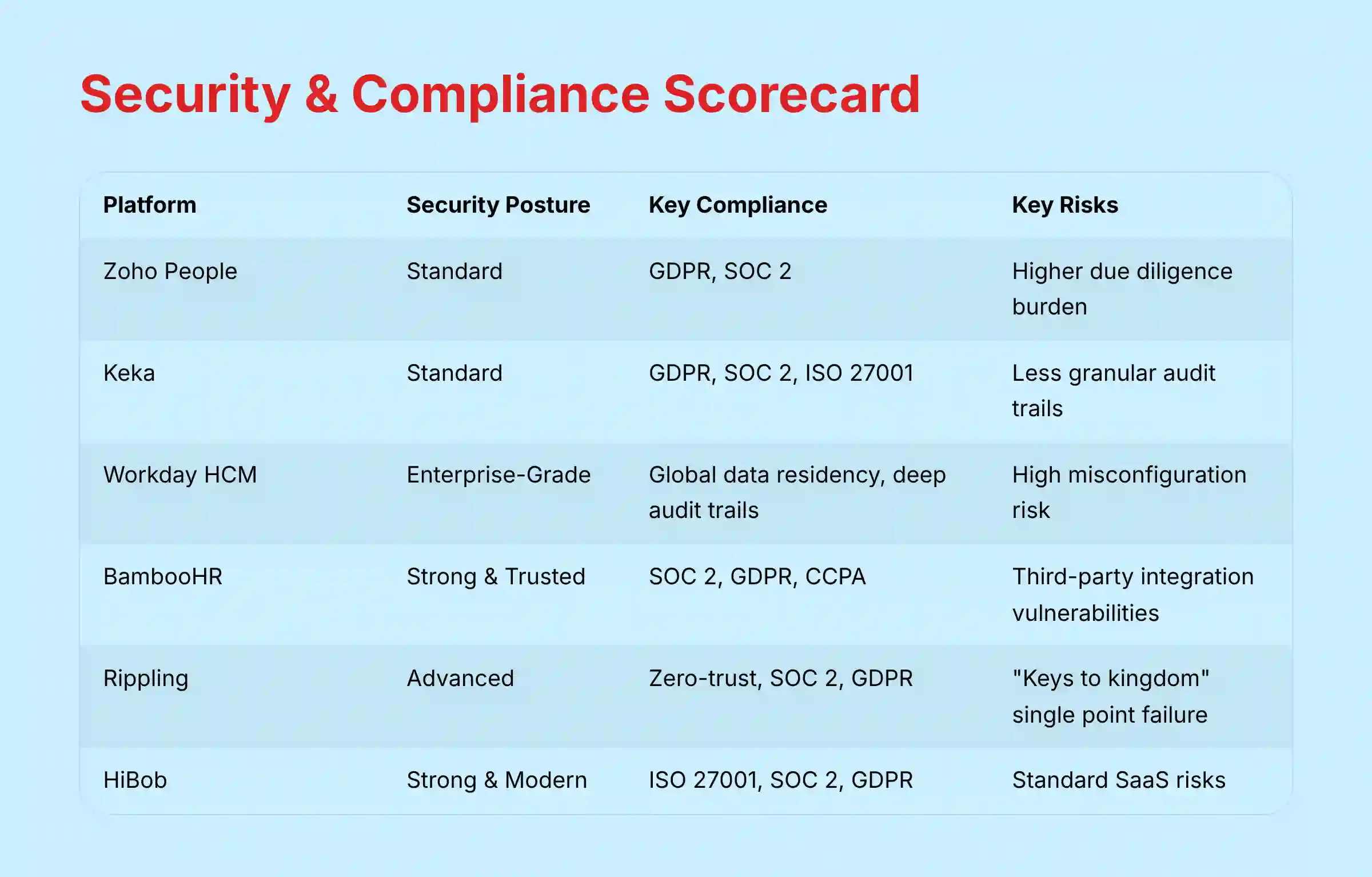
HR data is highly sensitive, so security is a top priority. All these platforms have standard certifications like SOC 2 Type II, ISO 27001, and comply with GDPR. However, our analysis shows that real-world risks often come from a platform’s architecture and how it’s implemented.
Security and Compliance Scorecard
| Tool | Security Posture | Key Compliance Attributes | Documented User-Reported Risks |
|---|---|---|---|
| Zoho People | Standard | GDPR, SOC 2 | Higher customer due diligence burden; requires manual verification of data residency. |
| Keka | Standard | GDPR, SOC 2, ISO 27001 | Less public scrutiny; audit trail capabilities are functional but less granular than enterprise tools. |
| Workday HCM | Enterprise-Grade | Global data residency options, deep audit trails, highly granular RBAC. | High risk of customer-side misconfiguration in role-based access control (RBAC). |
| BambooHR | Strong & Trusted | SOC 2, GDPR, CCPA | Vulnerabilities from third-party integrations in its API marketplace. |
| Rippling | Advanced (HR + IT) | Zero-trust principles, SOC 2, GDPR, CCPA/CPRA | “Keys to the kingdom” single point of failure; requires vigilant RBAC management. |
| HiBob | Strong & Modern | ISO 27001, SOC 2, GDPR | Standard SaaS risks; requires strong employee training against phishing. |
Analysis of User-Reported Risks and Liabilities
Understanding these risks is part of your professional responsibility as an HR leader. Here are the specific issues our research uncovered.
Workday’s Risk of Misconfiguration
Workday HCM provides the most granular Role-Based Access Controls (RBAC) on the market, essential for global enterprises. However, a Director of HR Tech at a Fortune 500 company warned us, “One wrong setting in the role-based permissions could expose sensitive compensation data across regions.” The platform’s security is top-tier, but its complexity makes customer-side errors a serious concern.
Such a misconfiguration is not merely a technical error; it can constitute a serious data breach under regulations like GDPR or CCPA, exposing the organization to significant financial penalties and reputational harm. We always recommend a third-party audit of RBAC settings post-implementation.
Rippling’s “Keys to the Kingdom” Security Risk
Rippling centralizes HR, IT, and Finance data. This creates a high-value target for attackers. An IT Director described this as a “keys to the kingdom” scenario, where one single compromised admin account could give an attacker access to everything. This risk requires strict and vigilant access control management.
Zoho People’s Customer Due Diligence Burden
Our analysis found that Zoho People’s security documentation is not as proactive as its competitors. One compliance officer noted they “had to push Zoho’s security team for details.” This means you, the customer, have to work harder to verify its security posture.
BambooHR’s Integration-Related Vulnerabilities
BambooHR itself is very secure. However, risks can be introduced through the third-party apps connected to it. Each integration is a potential weak point, so you must carefully vet every app in your HR tech stack.
As a best practice, task your IT security lead with creating a ‘Third-Party Integration Vetting Checklist.’ This checklist should require vendors to provide their full SOC 2 Type II report and detail their data access protocols, ensuring you are not introducing a weak link into an otherwise secure system. We always advise clients to involve their IT security lead when evaluating any integration.
Financial Impact Analysis: Comparing Pricing Models and Total Cost of Ownership (TCO)
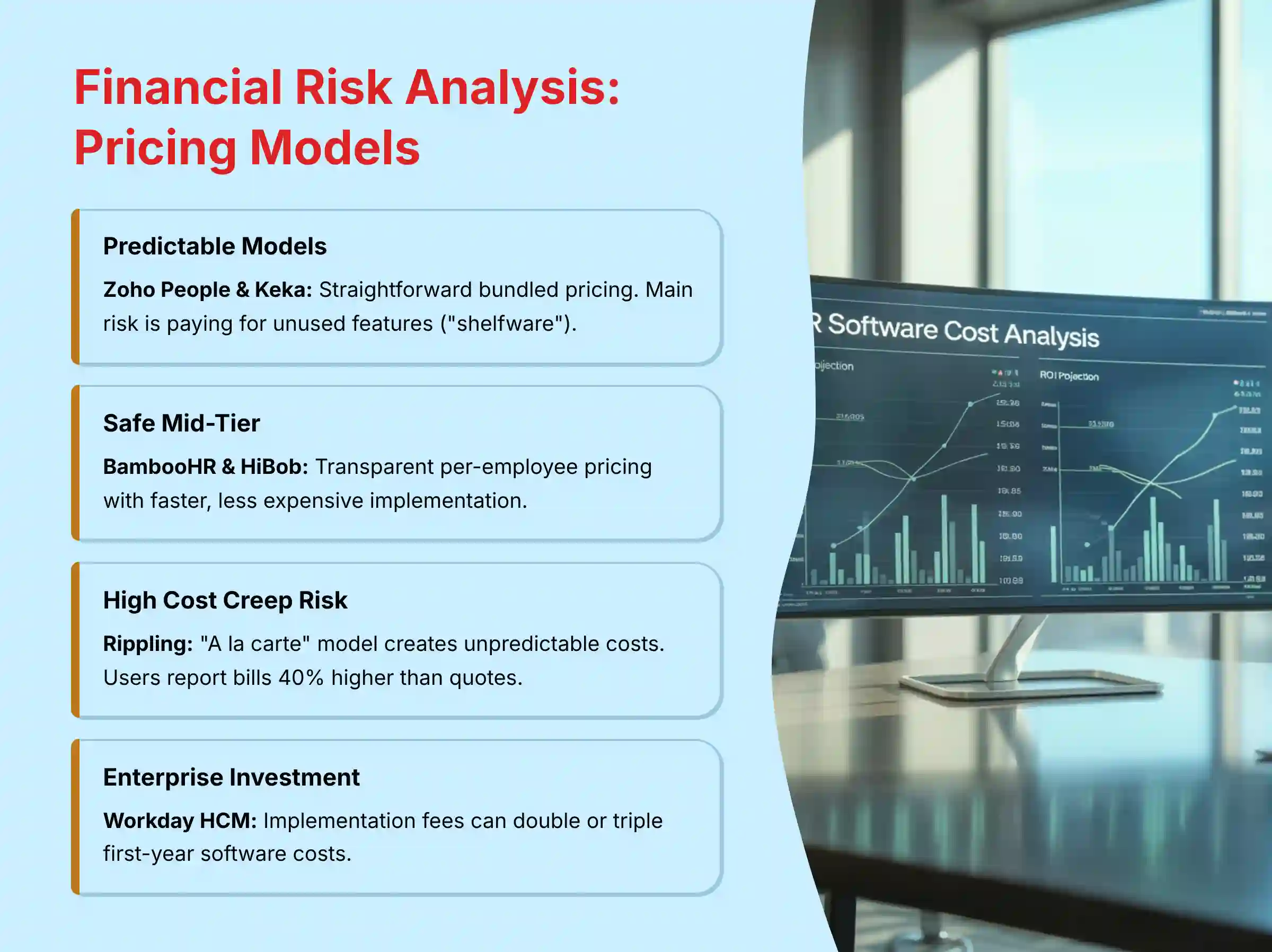
Your HRIS budget goes far beyond the monthly subscription fee. Understanding the total cost of ownership (TCO) is necessary for making a financially sound decision. The pricing models themselves carry different levels of risk.
Predictable and All-Inclusive Models: Zoho People and Keka
Zoho People and Keka are praised for their straightforward, bundled pricing. You know what you are paying for upfront. The main financial risk here is paying for features that your team does not use, often called “shelfware.”
The “Safe” Mid-Tier Model: BambooHR and HiBob
BambooHR and HiBob use transparent, tiered pricing, typically per employee per month. Their implementation processes are usually faster and less expensive than enterprise solutions. This makes them a financially safer mid-tier option.
The “A La Carte” Model and Cost Creep Risk: Rippling
Rippling’s “a la carte” model offers immense flexibility but is frequently criticized by users for creating unpredictable costs. Unlike all-inclusive packages, nearly every functional module—from time tracking to device management—is an additional line item.
This model creates a real risk of significant cost creep. In our research, a Head of Finance for a mid-sized tech company reported their first-year Rippling bill was 40% higher than the initial sales quote due to necessary module upsells during implementation. This is a critical risk you must budget for proactively.
We strongly advise that your Head of Finance or a financial consultant review any “a la carte” sales quote to model a worst-case scenario budget. HR and Finance leaders evaluating Rippling must conduct rigorous due diligence during the sales process. It is critical to:
- Get a comprehensive quote that explicitly lists all required modules for the first year and anticipated future needs.
- Ask for a clear schedule of fees for any modules that might be added post-implementation.
- Involve finance and legal teams to review the contract for any clauses related to automatic renewals or price increases.
The Enterprise Investment Model: Workday HCM
Workday HCM is known for high software costs and expensive implementation by certified consultants. These implementation fees can easily double or triple the first-year cost of the software. It is a massive investment reserved for large enterprises.
Any company considering Workday must engage with certified implementation partners to get a detailed Statement of Work (SOW) that outlines the full project cost. This statement should be treated as a budgetary rule of thumb to ensure sufficient funds are requested, not as a substitute for a formal quote.
Head-to-Head Summary: Strengths and Weaknesses of Each Platform

Zoho People: Strengths vs. Weaknesses
Top 3 Strengths:
- Unbeatable Ecosystem Value: Seamless integration for existing Zoho customers.
- Cost-Effective Pricing: Highly competitive and predictable pricing for a broad feature set.
- Strong Global Capabilities: Strong support for multi-national SMBs.
Top 3 Weaknesses:
- Clunky User Interface: Dated UX can hinder employee adoption.
- Complex Workflow Setup: Automation engine is powerful but not intuitive.
- Requires Customer Due Diligence: Security documentation is less proactive than competitors.
Keka: Strengths vs. Weaknesses
Top 3 Strengths:
- Excellent User Experience: Modern, intuitive interface drives employee engagement.
- Strong Core HR Focus: Excels at payroll, performance, and leave management.
- Intuitive Automation: Easy to set up and manage core HR workflows.
Top 3 Weaknesses:
- Higher Price than Zoho: The better UX comes at a premium.
- Limited Non-HR Ecosystem: Lacks the native non-HR integrations of Zoho or Rippling.
- Less Proven at Enterprise Scale: Primarily focused on the SMB/Mid-Market.
Workday HCM: Strengths vs. Weaknesses
Top 3 Strengths:
- Enterprise-Grade Power: Unmatched scalability and configurability for global corporations.
- Gold-Standard Compliance: Top-tier security and support for complex regulations.
- Unified HCM Suite at Scale: A true single source of truth for all HR functions at scale.
Top 3 Weaknesses:
- Prohibitively Expensive: High TCO due to licensing and implementation fees.
- Extreme Complexity: Requires a dedicated team of experts to manage and configure.
- Poor End-User Experience: Often frustrating for employees to navigate.
BambooHR: Strengths vs. Weaknesses
Top 3 Strengths:
- Supreme Ease of Use: The industry benchmark for an intuitive, clean UX.
- Trusted and Reliable: Long-standing reputation for security and customer support.
- Fast Implementation: Quick to deploy and easy for employees to adopt.
Top 3 Weaknesses:
- Limited Automation Logic: Not built for complex or cross-departmental workflows.
- Basic Feature Set: May be outgrown by rapidly scaling or complex organizations.
- Relies on Third-Party Integrations: Lacks the all-in-one capabilities of Rippling or Zoho.
Rippling: Strengths vs. Weaknesses
Top 3 Strengths:
- Unified HR + IT Automation: Unique ability to unify HR and IT workflows, a major security and efficiency win.
- Modern and Powerful OS: A true “business operating system” for scaling companies.
- Strong Automated Onboarding: Excels at automating the entire onboarding lifecycle.
Top 3 Weaknesses:
- Unpredictable Pricing Model: High risk of significant cost overruns.
- Concentrated Security Risk: A single compromised admin account is a “keys to the kingdom” scenario.
- Overwhelming for Simple Needs: Can be overly complex for companies that only need core HR.
HiBob: Strengths vs. Weaknesses
Top 3 Strengths:
- Best UX for Company Culture: Interface and features are built to drive engagement.
- Deep Talent Management Tools: Excels in performance, engagement, and culture-building tools.
- Modern and Flexible Platform: Highly customizable to fit the needs of people-first companies.
Top 3 Weaknesses:
- Lacks Integrated IT/Finance: Doesn’t have the integrated IT and Finance capabilities of Rippling.
- Higher Price Point: You pay a premium for the focus on employee experience.
- Complex Data Migration: Data migration for historical performance data can be a challenge.
Final Verdict: Which Zoho People Alternative is Right for Your Business Profile?

There is no single “best” tool. The right choice depends on your company’s specific needs, priorities, and risk profile. Our recommendations are based on mitigating the most common business risks we see in our consulting work.
Best for the Budget-Conscious SMB in the Zoho Ecosystem: Zoho People
The financial and integration benefits are simply too large to ignore. For these companies, the risk of a clunky user interface is acceptable when weighed against the immediate cost savings and operational efficiency of staying in one ecosystem. Primary Risk Mitigated: Excessive technology spend and integration complexity.
Best for People-Focused, Mid-Market Companies: Keka or HiBob
The investment in a superior user experience is justified by higher employee engagement and retention. Choose Keka for a polished, intuitive core HR experience. Choose HiBob if your main business risk is high employee turnover and you need deep tools to build company culture. Primary Risk Mitigated: Employee dissatisfaction and high turnover.
Best for Simple, Reliable, “No-Headaches” Core HR: BambooHR
This is the safest and most reliable choice for minimizing administrative errors and ensuring high user adoption for essential HR tasks. The primary risk it solves is operational disruption. BambooHR is the dependable family sedan of the HRIS world; it gets the job done safely every time. Primary Risk Mitigated: Operational disruption and low user adoption.
Best for Security-First, Rapidly Scaling Companies: Rippling
Rippling is the only platform that solves the combined risk of manual inefficiency and insecure employee offboarding. Its financial risk must be carefully managed with strict budget oversight, but its unique HR-plus-IT automation capabilities are unmatched for scaling businesses. Primary Risk Mitigated: Inefficiency and security gaps from manual onboarding/offboarding processes.
Best for Large, Global Enterprises with Complex Needs: Workday HCM
Workday HCM is the only platform built to handle the scale and complexity of a global enterprise. The high cost is a necessary investment to mitigate the huge financial and legal risks of non-compliance across multiple countries. Primary Risk Mitigated: Global compliance failures and data governance complexity.
What Other Factors Influence the HRIS Decision-Making Process?
Beyond features and price, the most strategic HRIS decision connects the platform’s capabilities to your company’s core people-strategy. This is the bridge between technical review and business impact. Consider how each platform supports these critical strategic functions:
- Talent and Succession Planning: A mature company facing a leadership gap needs a system like Workday or HiBob where performance review data directly informs the succession planning module. This allows you to identify high-potential employees and build bench strength, a process many simpler systems can’t support.
- Pay Equity and Compensation Strategy: If your organization is focused on fairness and transparency, you need a platform with robust analytics. A Compensation and Benefits Analyst will need the ability to run pay equity audits across demographics, roles, and performance levels. Tools with weaker reporting modules make this critical compliance and culture task a manual, spreadsheet-driven nightmare.
- Skill Gap Analysis and Career Pathing: For high-growth companies worried about retaining talent, the ability to support career pathing is paramount. A platform like HiBob helps map out an employee’s potential career journey within the company. Its AI can then perform a skill gap analysis and recommend L&D resources, demonstrating a tangible investment in employee growth and directly combating attrition risk.
- Workforce Planning and Forecasting: Strategic HR leaders must answer C-suite questions about future hiring needs. An advanced HR analytics suite, often found as an add-on to platforms like Workday, allows you to model business scenarios (e.g., “What is the staffing cost of opening a new office in Q3?”) and connect people data directly to financial forecasts.
For more comprehensive insights on leveraging AI in talent acquisition alongside your HRIS choice, explore our Best 10 AI for Talent Acquisition guide.
Frequently Asked Questions About Zoho People Alternatives
What is the main difference between Rippling’s “all-in-one” and Zoho’s ecosystem approach?
Rippling’s “all-in-one” approach combines HR, IT, and Finance into a single, unified platform where data and workflows are natively connected. Zoho’s ecosystem approach connects separate, specialized applications (Zoho People, Zoho Books, etc.). Rippling’s model offers deeper cross-departmental automation, while Zoho’s model offers more flexibility to pick and choose which apps you need.
Is Keka’s better user experience worth the higher price compared to Zoho People?
The answer depends on the value you place on employee adoption and engagement. If your employees avoid using your HRIS for self-service tasks, it creates more administrative work for your HR team, negating some of the cost savings. For many mid-market companies, Keka’s higher price is a worthwhile investment to ensure the tool is actually used.
Why is BambooHR considered a “safer” choice for SMBs?
BambooHR is considered safer because it focuses on doing core HR functions extremely well with a simple, intuitive interface and a long track record of reliability. This focus minimizes the risk of implementation failure, low user adoption, and errors in critical tasks like time tracking. It avoids the complexity and potential hidden costs of more expansive platforms.
Can a mid-sized company realistically implement Workday HCM?
It is highly unlikely. The cost and complexity of Workday HCM are designed for large enterprises with thousands of employees and dedicated HR technology teams. A mid-sized company would find the implementation fees, which often exceed six figures, and the need for specialized consultants to be prohibitive.
Which platform, Rippling or HiBob, is better for managing company culture in a remote team?
HiBob is purpose-built for managing and enhancing company culture, especially in a remote or hybrid environment. Its features for recognition, surveys, and performance are designed to foster connection and engagement. While Rippling is powerful, its primary focus is on operational efficiency across HR and IT, not on the nuances of culture-building.
What are the biggest hidden costs to watch for when evaluating HRIS platforms?
The three biggest hidden costs are implementation fees, charges for additional modules, and data migration expenses. Platforms like Workday have mandatory, expensive implementations. Rippling’s “a la carte” model can lead to significant cost creep. Always get a detailed quote that includes all potential modules and one-time fees in writing.
From a security standpoint, is it safer to have an integrated system like Rippling or a best-of-breed approach?
There is a trade-off. An integrated system like Rippling centralizes risk but gives you powerful, unified security controls (like instantly disabling all apps for a terminated employee). A “best-of-breed” approach with multiple tools (like BambooHR plus integrations) spreads risk out, but each integration point is a potential vulnerability you must manage separately.
How important is implementation support, and which of these vendors excels?
Implementation support is very important, as a poor setup can cripple your HR operations. BambooHR is widely praised for its excellent customer support and smooth implementation process, which is a key reason for its high customer satisfaction scores. Enterprise systems like Workday require certified third-party consultants, which is a different and much more expensive support model.
For additional support and common questions, you can also refer to our Zoho People FAQs section.
Important Disclaimers
Technology Evolution Notice:
The information about Zoho People Top Alternatives and Competitors and other AI Tools For HR and Recruiting tools presented in this article reflects our thorough analysis as of 2025. Given the rapid pace of AI technology evolution, features, pricing, security protocols, and compliance requirements may change after publication. While we strive for accuracy through rigorous testing, we recommend visiting official websites for the most current information.
Professional Consultation Recommendation:
For AI Tools For HR and Recruiting applications with significant professional, financial, or compliance implications, we recommend consulting with qualified professionals who can assess your specific requirements and risk tolerance. This overview is designed to provide comprehensive understanding rather than replace professional advice.
Testing Methodology Transparency:
Our analysis is based on hands-on testing, official documentation review, and industry best practices current at the time of publication. Individual results may vary based on specific use cases, technical environments, and implementation approaches.
Conclusion: Making a Confident, Risk-Informed HRIS Decision

Choosing an HRIS is one of the most impactful technology decisions a business can make. As our analysis shows, the best alternative to Zoho People is not a single platform but the one that best aligns with your company’s scale, budget, and tolerance for financial and security risks.
By using this risk-assessed framework, you can move beyond feature lists and make a confident, strategic choice. For more in-depth reviews of tools like these, explore our complete analysis of Zoho People Top Alternatives and Competitors.


Leave a Reply