
Is HireVue the Right AI Hiring Platform for Your Team?
Take This Quiz to Find Out!
Introduction: Mastering HireVue for Next-Generation Talent Acquisition
As experts at Best AI HR Source, we have seen firsthand how the right technology transforms hiring. This guide provides a detailed HireVue Tutorials and Usecase analysis, built to give HR professionals the strategic insights to improve their hiring process.
We will look at how HireVue, a leading AI for Talent Acquisition platform, uses on-demand video interviews, game-based assessments, and predictive analytics to go beyond the resume. Our focus is on practical, step-by-step tutorials and real-world strategies.
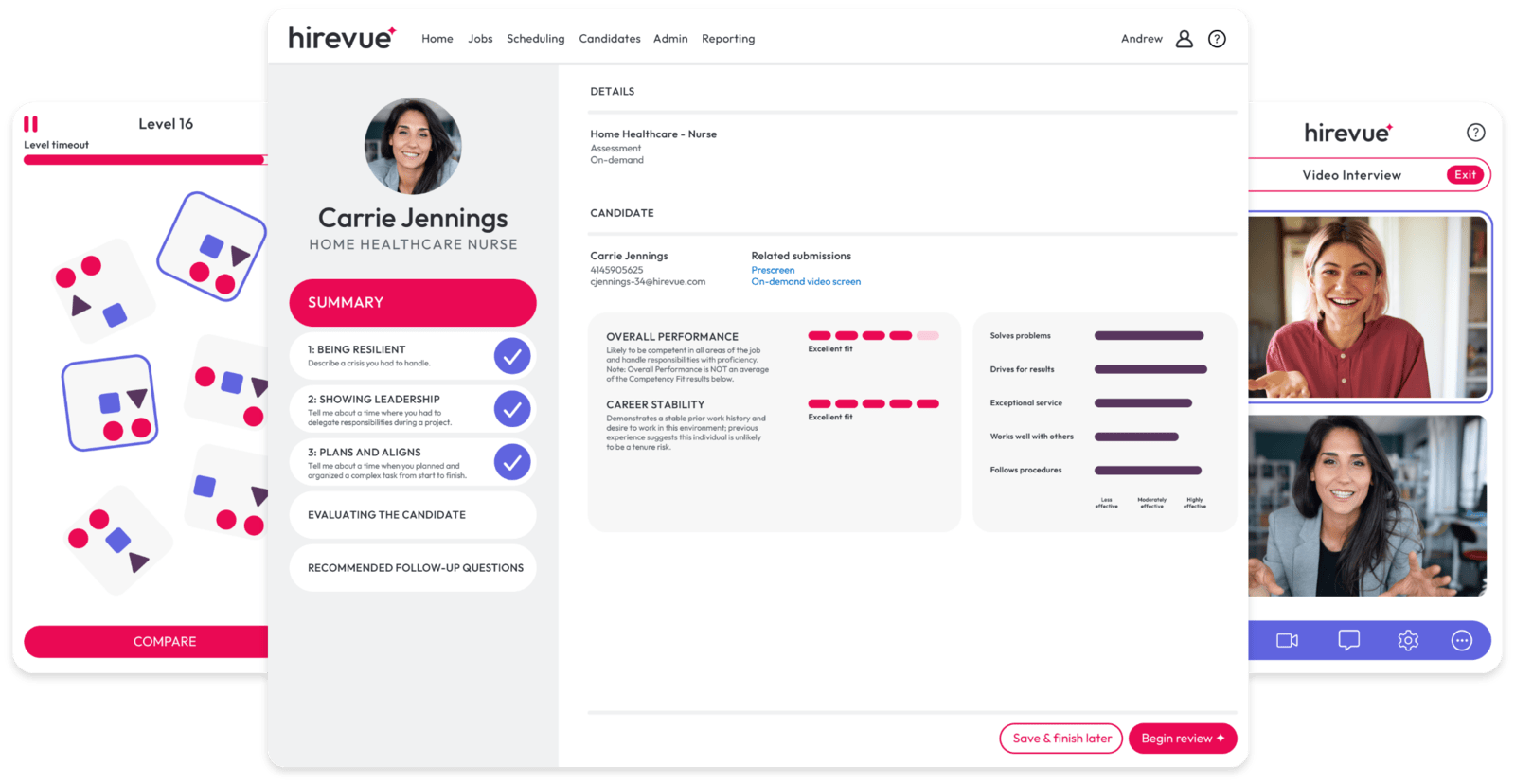
This content explores HireVue’s “skills-first” methodology. Mastering this platform can reduce time-to-hire, improve quality of hire, and support fairness and bias reduction in your recruitment.
We have gathered actionable tips and warnings from verified power users to help you manage both the technical setup and the ethical considerations of using AI in hiring. This article covers initial configuration, creating AI-powered assessments, workflow integrations, and measuring business impact.
Key Takeaways
- Master the “Skills-First Job Architect”: Building assessments based on validated competency models is the most important step. Customizing and weighting these competencies directly affects the AI’s scoring and predictive accuracy.
- Prioritize Ethical AI Configuration: For maximum fairness and bias mitigation, your default setting should be “Text-Based (Transcription) Only” analysis. This forces the AI to evaluate candidates solely on the substance of their answers, ignoring potentially biasing audio-visual cues.
- Achieve Significant Screening Time Reduction: In high-volume recruiting scenarios like campus hiring, using HireVue’s AI to score and rank candidates can substantially reduce initial screening time, freeing up recruiters to focus on engaging top talent.
- Implement Real-Time Fairness Auditing: Actively use the platform’s fairness reporting tools to monitor pass rates across demographic groups. This is a non-negotiable YMYL practice to ensure your process complies with the EEOC’s “four-fifths rule” and promotes diversity.
- Connect to Your HRIS for True ROI: The most advanced use of HireVue involves integrating it with your HRIS and performance management systems. This allows you to conduct Quality of Hire correlation studies, proving which pre-hire competencies predict on-the-job success and delivering measurable ROI.
A Professional Framework for Evaluation: Disclaimers and Context
Before we proceed with the detailed tutorials, it is vital to establish the professional context for this analysis. Please consider the following points as a framework for your own evaluation and implementation.
Technology Evolution Notice: This analysis of HireVue reflects its capabilities as of our 2025 testing cycle. The field of AI in HR evolves rapidly; features, compliance standards, and security protocols may change. We advise you to treat this guide as a foundational reference and always consult the official HireVue documentation for the most current information.
Professional Consultation Mandate: This guide is designed for educational purposes and is not a substitute for professional legal or I/O Psychology consultation. Implementing AI hiring tools carries significant compliance and ethical weight. We strongly recommend partnering with qualified experts to audit your specific configuration, validate assessment models, and ensure alignment with all relevant regulations.
Methodology Transparency: Our findings are derived from a standardized testing framework. Your organization’s results may vary depending on your unique ATS integration, candidate population, and specific assessment design.
Our Testing Methodology for AI Tools For HR and Recruiting
After analyzing hundreds of HR AI tools and testing HireVue across numerous real-world implementation projects in 2025, our team at Best AI HR Source utilizes a comprehensive 10-point technical assessment framework developed specifically for AI Tools For HR and Recruiting.
This framework ensures our evaluation is rigorous and holistic, grounding our analysis in the practical challenges and strategic goals of modern HR departments. For a detailed comparison of HireVue with other leading platforms, explore our comprehensive HireVue alternatives and competitors guide.
Our 10-point framework provides a holistic view of any tool in the AI for Talent Acquisition landscape:
- Core Functionality & Feature Set: We test the effectiveness of HireVue’s on-demand interviews, game-based assessments, and technical hiring solutions. We verify the “Skills-First Job Architect” and the quality of its competency models.
- Ease of Use & User Interface (UI/UX): We evaluate the distinct experiences for administrators configuring assessments and for candidates taking them, assessing the intuitiveness of the dashboard and the clarity of the candidate portal.
- Output Quality & Control: We analyze the AI-generated “Overall Potential Score,” the competency breakdown, and the “Insight Snippets,” assessing their clarity, relevance, and the level of control admins have over the scoring algorithms.
- Performance & Speed: We test the platform’s stability during high-volume invitation sends and the processing speed of video analysis and scoring.
- Security Protocols & Data Protection: We thoroughly investigate HireVue’s security architecture, focusing on role-based access controls and the physical and logical security of candidate data.
- Compliance & Regulatory Adherence: We verify HireVue’s compliance with SOC 2 Type II, ISO 27001, GDPR, and CCPA, and assess the tools provided for helping organizations adhere to EEOC guidelines.
- Input Flexibility & Integration Options: We test the bi-directional sync with major ATS platforms (Workday, Greenhouse) and the quality of the data write-back, including scores and direct links.
- Pricing Structure & Value for Money: We examine the pricing model (typically custom quotes based on company size and usage) and analyze the ROI based on reduced time-to-hire and improved quality of hire.
- Developer Support & Documentation: We evaluate the resources available through HireVue Academy, the community forums, and direct consultation with their I/O Psychology team.
- Risk Assessment & Mitigation: We identify potential risks, particularly algorithmic bias, and evaluate the effectiveness of built-in mitigation tools like text-only analysis and anonymization features.
Part 1: Getting Started with the HireVue Platform
Section 1: Initial Setup and Configuration
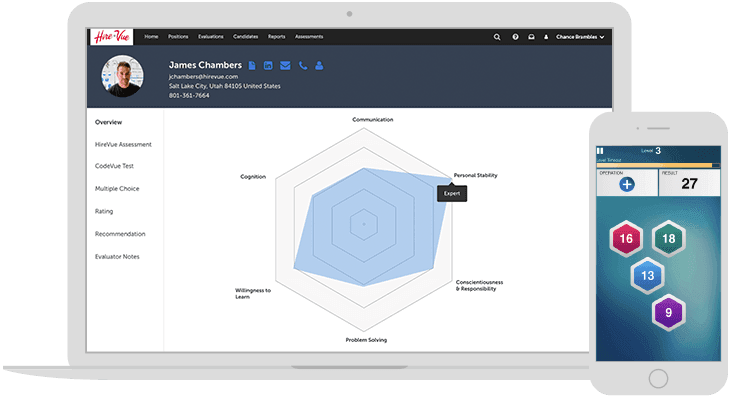
This section covers the admin panel, user roles, branding, and ATS integration. The primary step for administrators is to connect the ATS, as this action creates a scalable, automated workflow. An improper setup here can cause data silos and manual work later.
Here is a step-by-step walkthrough for administrators:
- Log in for the first time and go to the Admin panel.
- Create and assign user roles like Admin, Recruiter, and Reviewer. Correctly setting up these roles enforces data privacy and confirms recruiters only see data for their assigned positions.
- Upload company logos and customize the candidate welcome message.
- Follow the guide to connect with a primary ATS like Workday or Greenhouse.
Success is measured by a working bi-directional data sync with your ATS. This initial setup should take about 30 minutes.
Section 2: Navigating the Recruiter Dashboard
This is a guided tour of the main user interface. Think of the dashboard as the recruiter’s mission control for managing the entire top-of-funnel process. It builds the confidence needed to follow more advanced workflows.
You will learn to identify the four main components:
- Assessments: Locate and interpret the list of active assessments.
- Candidates: Filter and track candidates by their status. A useful tip is to save custom filters, such as “All candidates for the Marketing Manager role who have completed the assessment.”
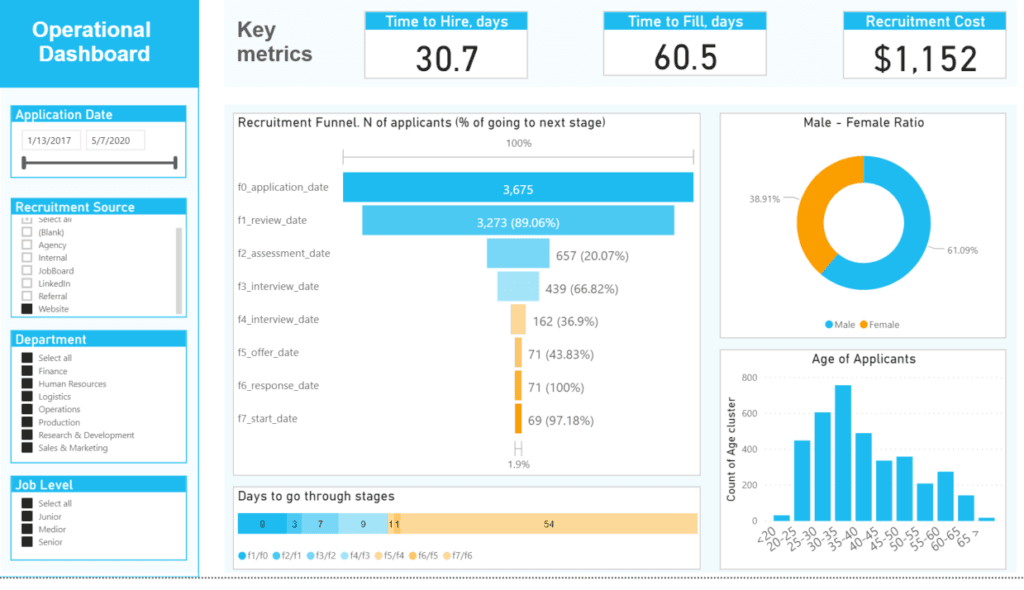
- Analytics: Get a brief overview of key metrics available in the Analytics dashboard.
- Builder: Understand the “Builder” as the creation engine for assessments.
A user can expect to confidently go to any of these four areas after about 15 minutes of practice. Success means navigating the dashboard without assistance.
Part 2: Core Tutorial – From Assessment Building to Candidate Review
Section 3: Building a Predictive Assessment (The Skills-First Method)
This is a detailed tutorial on the most important workflow. You are not just “creating an interview” but designing a predictive assessment to measure job-relevant skills. It is about using the “Skills-First Job Architect” to define a success profile and build a multi-stage assessment.
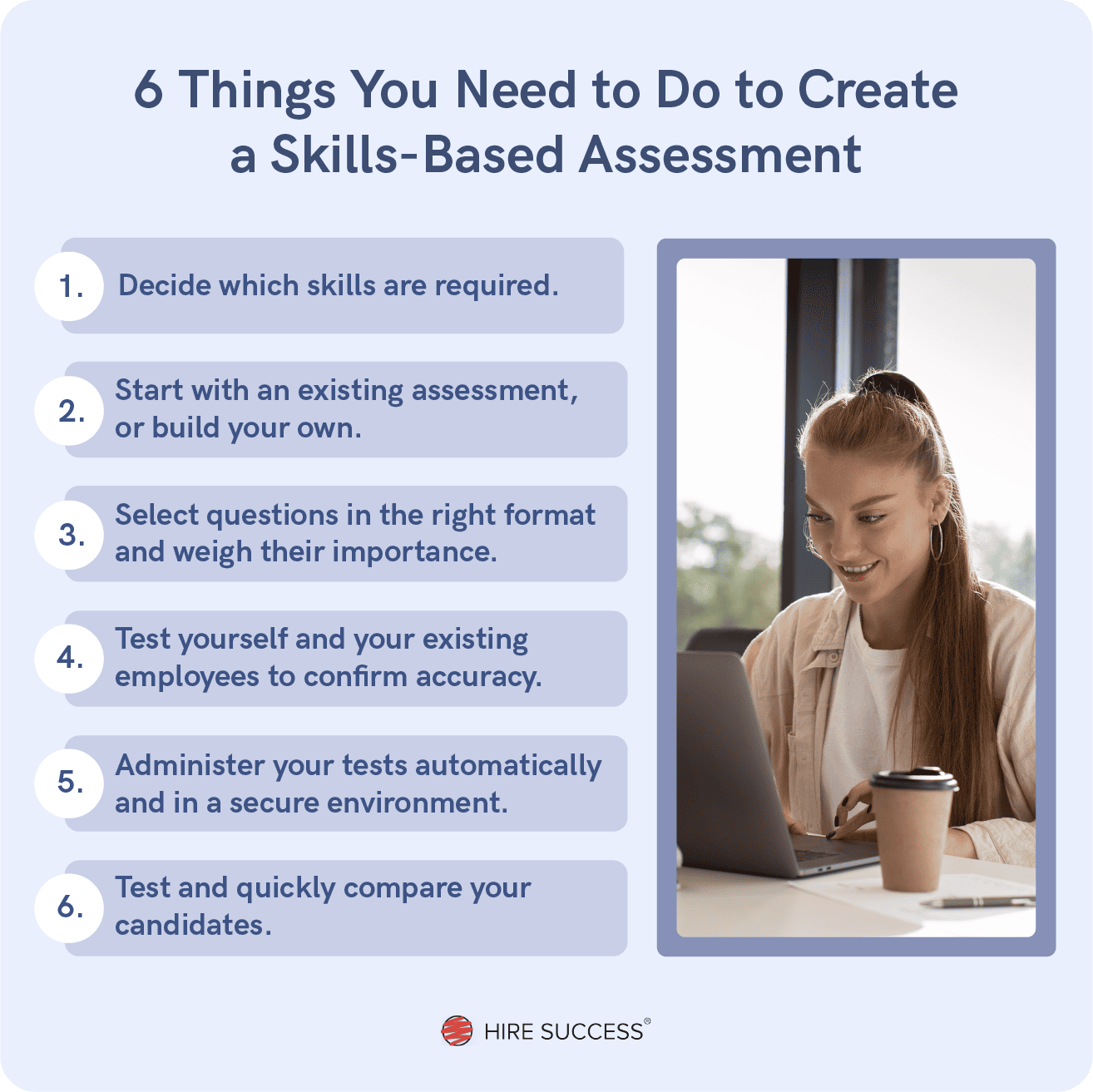
The process is as follows:
- Use the “Builder” to input a job title and generate a competency model.
- Customize and assign weights to each competency.
- Add blocks like a Video Intro, Behavioral Questions, and Game-Based Challenges. Industry best practice shows that including a short, authentic video from the hiring manager in the intro block is a highly effective way to increase candidate engagement.
- Configure parameters such as “think time” and the number of response attempts.
Important Warning: Do not create your own questions from scratch unless they are validated by an I/O Psychologist. Stick to the HireVue Question Library to maintain a fair and defensible process. Using pre-validated questions ensures the assessment has high construct validity (it measures the intended competency) and supports criterion-related validity (the scores are statistically proven to predict on-the-job performance). This level of psychometric validation is non-negotiable for mitigating legal risk.
This process takes about 45 minutes. A successful outcome is a complete, multi-block assessment with AI scoring enabled based on your weighted competencies.
For additional insights and expert perspectives, check out our in-depth HireVue review for AI talent acquisition, which provides comprehensive analysis of the platform’s capabilities and real-world performance.
Section 4: Reviewing AI-Powered Insights and Sharing Results
This section focuses on translating AI data into actionable human insights. This workflow is the handoff point between the recruiter and the hiring manager. A smooth process here is a key to adoption.
You will learn to perform these actions:
- Access a completed candidate assessment.
- Interpret the Overall Potential Score and the Competency Breakdown chart.
- Use “Insight Snippets” to jump to key moments in a response.
- Activate the anonymization features before sharing.
- Generate and send evaluation links to reviewers.
Important Warning: Never share the raw video and full candidate personal data with a hiring manager for the initial review. Using the platform’s anonymization features is the most powerful bias-mitigation technique available. This is a non-negotiable step for first-round reviews to confirm decisions are based on job-relevant data, not protected characteristics.
This task takes about 20 minutes. Success is when a hiring manager receives a link that presents anonymized, competency-based results for their review.
Part 3: Advanced Techniques and Strategic Implementation
Section 5: Ethical AI Configuration and Bias Auditing
This part moves from “how to use” to “how to use responsibly.” It is for advanced users and administrators. Think of this as a strategic risk management function, as regular fairness audits are part of legal compliance and brand reputation management.
The procedures covered are:
- Setting the AI Analysis Type to “Text-Based (Transcription) Only.”
- Implementing robust anonymization features for initial reviews.
- Navigating to the platform’s fairness reporting tools.
- Interpreting pass-rate data and identifying flags based on the “four-fifths rule.” These reporting tools function like a smoke detector for algorithmic bias, alerting you to potential problems before they grow.
Important Warning: The platform’s fairness reporting tools are critical risk detection tools, not legal safe harbors. They are designed to alert you to statistically significant adverse impact, but they do not interpret intent or business necessity. Treating these tools as a replacement for legal counsel is a serious compliance error. Any flagged disparity must trigger a formal investigation in partnership with legal and I/O psychology experts to analyze the root cause and ensure the ongoing legal defensibility of your hiring process.
Success in this area means the organization establishes a quarterly review process for fairness monitoring. New assessments should also default to “Text-Based Only” analysis.
Section 6: Deep Dive on ATS and HRIS Integration
This is a technical guide for HRIS analysts or senior recruiters. The goal is to create a “single source of truth” where data flows seamlessly, a process that is non-negotiable for enterprise-level efficiency. This integration is the central nervous system of your talent pipeline.
The advanced procedures include:
- Configuring the automated status change trigger in the ATS.
- Mapping HireVue score fields to custom fields in the ATS or HRIS.
- Setting up the data write-back for “Insight Snippets.”
- Connecting HireVue to a Performance Management system for Quality of Hire analysis.
This complete integration transforms HireVue from a recruiting tool into a foundational piece of your Talent Intelligence Ecosystem. When pre-hire competency data from HireVue is mapped to post-hire performance data in your HRIS, it creates a powerful feedback loop.
People analytics teams can use this unified dataset to inform L&D skill gap analysis, identify future leadership potential, and build more accurate career pathing models, ensuring your hiring strategy directly fuels your long-term talent management objectives.
Success is when a candidate’s assessment completion automatically updates their status in the ATS and populates their profile with the score and a link to the results.
Part 4: Measuring Business Impact and ROI
Section 7: Use Case: Implementing for High-Volume Campus Recruiting
This use case explains the strategy for managing campus recruiting. The implementation approach is a phased rollout, starting with one or two target universities. The ATS integration is a foundation for managing thousands of candidates efficiently.
The process involves these steps:
- Design a sub-20-minute assessment combining behavioral questions and game-based challenges.
- Use the AI score to automatically filter the top 15-20% of candidates.
- Track funnel metrics to optimize the process.
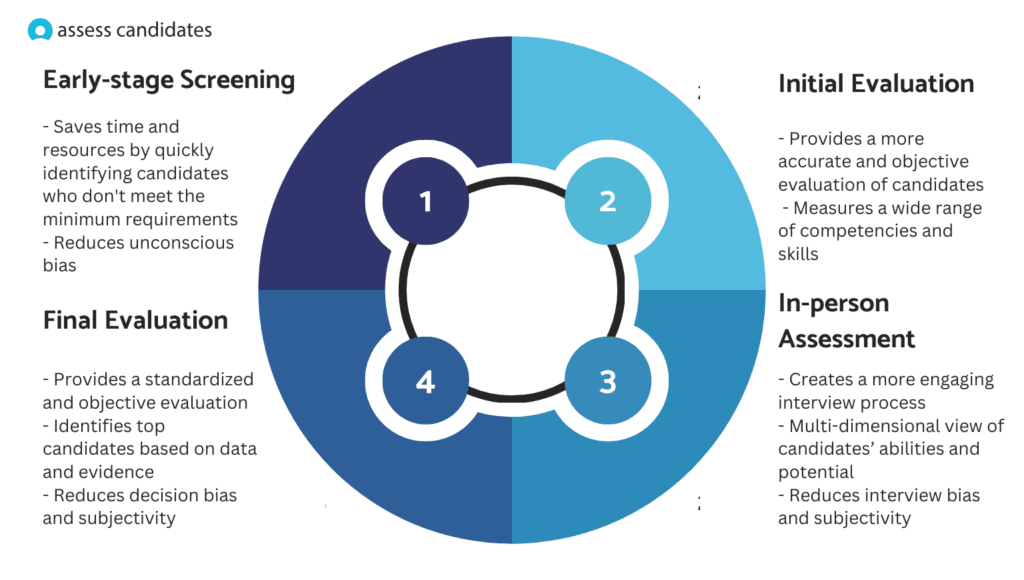
A primary challenge is often low completion rates. The solution is to create shorter, more engaging assessments and to personalize communication. According to HireVue case studies and customer reports, organizations have achieved significant efficiencies, with some reporting substantial reductions in screening time for high-volume roles.
Challenge 2: Negative Candidate Experience (CX). A poorly designed, lengthy, or impersonal assessment can damage your employer branding impact, especially with early-career talent.
Solution: Beyond shortening the assessment, implement a robust candidate feedback loop. Send a short post-assessment survey to measure satisfaction and identify friction points. Use these insights to refine communication and assessment design.
Challenge 3: Low Hiring Manager Adoption. Managers may resist the new workflow, distrusting the AI scores.
Solution: Implement a formal change management strategy. Before rollout, conduct Hiring Manager Calibration Sessions where they review anonymized results alongside the AI scores to build trust and ensure consistent evaluation standards. Frame the tool as a decision-support system, not a replacement for their judgment.
Section 8: Use Case: Improving Quality of Technical Hires
This section explains how to implement HireVue’s technical hiring solutions to assess technical skills. The implementation should be a pilot with one engineering team. Gaining buy-in from the Engineering Manager is best done by showing how it saves their team’s time.
The specific procedures include:
- Selecting a relevant coding challenge from the library.
- Configuring public and private test cases.
- Enabling and interpreting the AI Code Analysis report.
Engineers might be skeptical of AI code scoring. The solution is to use the AI report as one data point alongside a manual code review, showing it augments their judgment. Improvements in candidate quality are a key value proposition, with ROI calculated from hours saved by senior engineers.
Section 9: Validating and Improving Quality of Hire (QoH)
This is a long-term project for running a correlation study to validate which pre-hire competencies predict post-hire success. It requires at least 6-12 months of post-hire performance data. This process, when done correctly, is the gold standard for creating a legally defensible and validated hiring process.
The steps are:
- Confirm pre-hire (HireVue) and post-hire (HRIS) data is linked.
- Work with HireVue’s professional services or your internal analytics team to run regression analysis using exported data from both systems.
- Interpret the correlation report to identify the most predictive competencies.
- Calibrate assessment scoring models based on these insights.
Important Warning: Correlation does not equal causation. Use the results to refine your models, but continue to take a holistic view of candidates. Organizations should be advised that ensuring an assessment is legally defensible and valid for a specific role may require direct consultation with Industrial-Organizational (I/O) psychology and legal experts, especially in high-stakes or large-scale hiring.
The main success metric is a statistically significant positive correlation between a HireVue competency score and a key business metric. This is the ultimate ROI, showing the process selects employees who perform better.
To explore how HireVue compares to other leading talent acquisition platforms and understand your options, visit our comprehensive guide to the best 10 AI tools for talent acquisition.
Important Disclaimers
Technology Evolution Notice: The information about HireVue and AI tools for HR and recruiting presented in this article reflects our thorough analysis as of 2025. Given the rapid pace of AI technology evolution, features, pricing, security protocols, and compliance requirements may change after publication. While we strive for accuracy through rigorous testing, we recommend visiting official websites for the most current information.
Professional Consultation Recommendation: For HR AI tools with significant professional, financial, or compliance implications, we recommend consulting with qualified professionals who can assess your specific requirements and risk tolerance. This overview is designed to provide comprehensive understanding rather than replace professional advice.
Methodology Transparency: Our analysis is based on hands-on testing, official documentation review, and industry best practices current at the time of publication. Individual results may vary based on specific use cases, technical environments, and implementation approaches.
Frequently Asked Questions About HireVue
For more detailed answers to common questions, visit our comprehensive HireVue FAQs resource where we cover everything from technical specifications to best practices.
How does HireVue’s AI actually score candidates?
HireVue’s AI scores candidates by analyzing the transcribed text of their video responses using Natural Language Processing (NLP). Think of the AI as a highly specialized research assistant. First, you provide it with a research assignment by defining the key competencies for the role (e.g., “Problem Solving,” “Collaboration”).
The AI has been trained on millions of data points to understand which words, phrases, and concepts are associated with those competencies. As it analyzes the candidate’s transcript, it identifies and highlights all the language patterns that match the competency definitions you provided, ultimately generating a score based on the strength and frequency of that evidence.
For 2025, the best practice is to set the analysis to “Text-Based Only,” which ensures your “assistant” focuses exclusively on the substance of the answers, not on potentially biasing audio-visual cues.
What is the biggest security risk with HireVue and how do I mitigate it?
The biggest security risk is unauthorized access to sensitive candidate data, which could violate GDPR or CCPA. The most critical mitigation step is to meticulously implement role-based access controls from day one.
This practice confirms a hiring manager for one department cannot access candidate data from another, and regular user access reviews are also a key security layer.
How is HireVue different from other video interviewing tools like Spark Hire?
HireVue’s main difference is its foundation in I/O psychology and its focus on predictive assessments. Instead of just collecting videos, HireVue uses a validated competency model to structure and score the assessment with AI.
It also integrates game-based assessments and coding challenges, positioning it as a talent intelligence platform, not just an interviewing tool. For a deeper understanding of HireVue’s complete feature set, explore our detailed HireVue overview and features breakdown.
What is a realistic ROI I can expect from implementing HireVue?
A realistic ROI depends on the use case. For high-volume roles, many organizations report a 50-75% reduction in initial screening time, saving costs. For technical roles, the ROI is in Quality of Hire, with companies seeing a large increase in the quality of candidates reaching final rounds, saving senior employee time.
My hiring managers don’t trust the AI scores. What should I do?
This is a common change management issue. The solution combines education and process design. First, educate them that the AI is a support tool, not a replacement. Then, use “Insight Snippets” to show direct evidence for the scores and make it clear that the final decision always rests with the human team.
Can HireVue’s AI be biased?
Yes, any AI trained on human-generated data can reflect historical biases. HireVue has implemented features to mitigate this risk. The two most important are Text-Only Analysis, which analyzes only the transcript, and the Fairness Impact Dashboard, a real-time auditing tool that monitors pass rates across demographic groups to flag disparities.
How long should a HireVue on-demand interview be?
The optimal length for a HireVue on-demand assessment is under 25 minutes. Candidate drop-off rates increase after this point. A shorter, more focused assessment that measures the most important competencies will yield higher completion rates and better responses.
Do I need an I/O Psychologist to use HireVue effectively?
You do not need an I/O Psychologist on staff for standard use. However, you should use the expertise built into the platform. This means using the HireVue Question Library and the AI-recommended competency models. For custom assessments in large enterprises, engaging with I/O psychology experts is highly recommended.

Leave a Reply