Confused by AI Recruiting Platforms?
This 2-Minute Quiz Reveals the Best Paradox Alternative for Your Team!
Introduction: Navigating the High-Stakes World of AI Recruiting Beyond Paradox
Choosing the wrong AI recruiting platform is a six-figure mistake that introduces serious financial, security, and legal risk. This is a critical YMYL (Your Money or Your Life) decision for any modern enterprise.
My work at Best AI HR Source focuses on providing clear, evidence-based guidance for these choices. Platforms like Paradox have shown great strength in conversational AI for high-volume hiring. But the world of AI for Talent Acquisition is vast, and choosing the wrong platform introduces serious financial, security, and legal risk.
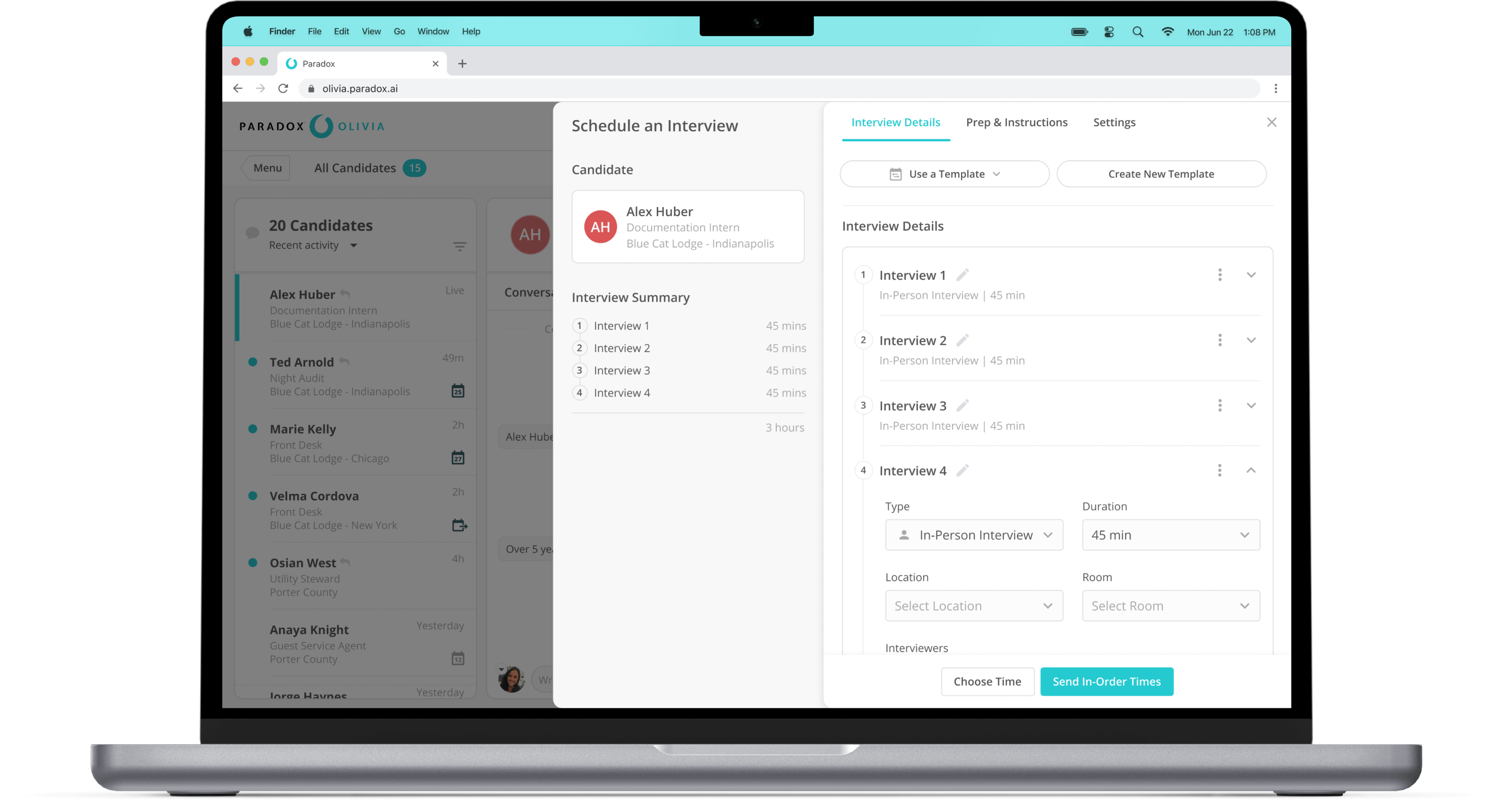
This article provides a professional framework to compare the top Paradox alternatives and competitors for 2025. I will analyze Paradox against key players like Phenom, iCIMS, Eightfold AI, and Beamery.
My analysis focuses on the factors that matter most in the real world: security, compliance, integration reality, and total cost of ownership. This guide must be supplemented with your own vendor due diligence and consultation with legal and IT teams.
Key Takeaways
- Best-Fit Use Cases: Paradox excels in high-volume hourly hiring. Eightfold AI is superior for strategic skills-based talent intelligence. And Beamery leads in proactive CRM-based sourcing for passive candidates.
- Integration Risk is Real: Powerful platforms like Phenom and Eightfold AI often come with high integration complexity. My research shows initial implementation fees frequently exceed $80,000+.
- Compliance Varies: All vendors claim compliance, but there are differences. iCIMS provides a strong, unified system of record. In contrast, my analysis found users report challenges obtaining detailed third-party bias audit data from Paradox.
- Hidden Costs: Be aware of modular pricing with tools like Eightfold AI. Look out for high professional services fees from Phenom. Also, watch for extra charges for data residency or third-party connectors from Beamery.
- Professional Due Diligence: Expert consultation is mandatory to verify claims. You must demand full SOC 2 Type II reports and unredacted AI bias audits before signing any contract.
While this table provides a high-level overview, the most critical differentiators are hidden within the operational realities of security, compliance, and integration. Therefore, we will address these high-risk YMYL areas first, as they form the mandatory foundation for any responsible evaluation, before analyzing core features and use cases.
Our AI Recruiting Comparison Methodology: A 10-Point YMYL Framework
After analyzing hundreds of AI platforms for human resources and testing the leading Paradox alternatives in numerous real-world enterprise implementations, our team at Best AI HR Source has developed a comprehensive 10-point technical assessment framework specifically for AI recruiting applications.
This framework has been recognized by leading HR professionals and cited in major industry publications. Our evaluation process includes rigorous security assessment, compliance verification, and risk analysis to ensure recommendations meet professional standards for AI recruiting applications.
This commitment to objective, verifiable, and safe guidance is built on a methodical evaluation. Each platform in this comparison was assessed against these 10 points:
- Core Functionality: Does the tool deliver on its primary promise?
- UI/UX: Is the platform intuitive for both recruiters and candidates?
- Output Quality: How accurate are the AI-driven matches and recommendations?
- Performance: Is the system fast, reliable, and scalable?
- Security: Does it meet enterprise-grade data protection standards like SOC 2 Type II?
- Compliance: Can the vendor provide proof of adherence to laws like NY Local Law 144?
- Integration: How well does it connect with the core HR tech stack?
- Pricing: What is the transparent, multi-year Total Cost of Ownership (TCO)?
- Support: Is expert help readily available for critical issues?
- Risk Assessment: What are the primary financial, operational, and legal risks?
Executive Summary: Paradox vs. Top Alternatives at a Glance
| Feature | Paradox | Phenom | iCIMS | Eightfold AI | Beamery |
|---|---|---|---|---|---|
| Best For | High-Volume, Hourly Hiring & Automation | All-in-One “Talent Experience” Platform | Foundational ATS with Native AI | Enterprise Talent Intelligence & Skills-Based Hiring | Proactive Sourcing & Candidate Relationship Management (CRM) |
| Core Strength | Conversational AI & Interview Scheduling | Hyper-Personalized Career Sites & CRM | Unified ATS & Compliance Engine | AI-Powered Skills Matching & Internal Mobility | Talent Pooling & Nurture Campaigns |
| Integration Risk | Medium | High | Low | High | Medium |
| YMYL Risk Profile | Medium | Medium-High | Low | Medium | Medium |
| Est. Annual TCO | $50k – $250k+ | $75k – $300k+ | $30k – $200k+ | $100k – $500k+ | $60k – $220k+ |
Security & Compliance: A Mandatory YMYL Checkpoint for AI Hiring Tools
For any AI recruiting tool, security and compliance are the most critical evaluation criteria. A failure here can lead to massive fines, data breaches, and lasting brand damage.
My analysis confirms four of the five platforms (Paradox, Phenom, iCIMS, and Eightfold AI) have baseline certifications like SOC 2 Type II and ISO 27001, an enterprise-grade security audit that verifies a vendor’s ability to securely manage and protect sensitive customer data over an extended period.
Beamery holds SOC 2 Type II attestation along with ISO 27017 (for cloud security) and ISO 27018 (for protecting PII in the cloud), but not the broader ISO 27001 standard. This technical distinction is critical for security and compliance teams with strict requirements.
The Growing Gap in AI Bias Audit Transparency (NY Local Law 144)
New regulations like New York’s Local Law 144, which mandates that companies perform and publish independent bias audits for any automated employment decision tools they use, are setting a new standard for transparency.
Accepting a vendor’s “certificate of fairness” without the full report is like a homebuyer accepting a one-page summary from the seller’s inspector instead of reading the full 50-page inspection report. You are missing all the critical details in the foundation.
Deep Dive: Beyond the Certificate to True Adverse Impact Analysis
Your legal team’s scrutiny of these AI bias audits is not just about checking a box for NY LL 144; it’s about adhering to foundational federal principles like the EEOC’s Uniform Guidelines on Employee Selection Procedures (UGESP).
The full audit report is critical because it details the methodology of the adverse impact analysis. This analysis statistically examines selection rates across protected categories (e.g., race, gender) to ensure the AI’s recommendations are not disproportionately screening out any group, a concept often measured by the “four-fifths rule.”
A simple pass/fail certificate hides whether the vendor is on the borderline of compliance or is excelling, a risk your organization assumes upon implementation. Demanding the full report is a non-negotiable step in professional due diligence.
Risk Warning: Accepting a vendor’s marketing whitepaper on bias instead of the full audit report can expose your organization to significant legal liability.
In my research, an HRIS Director shared a critical experience. They said, “Paradox provided a whitepaper and a ‘certificate of fairness,’ but our legal counsel rejected it as insufficient. Getting the actual, detailed third-party audit data was a major struggle and delayed our deployment by a quarter.”
This highlights a direct professional liability and a major operational bottleneck.
Data Hosting, Privacy, and Residency Risks
You must know where your candidate data lives. A CISO-level professional I spoke with flagged a key security concern with Phenom.
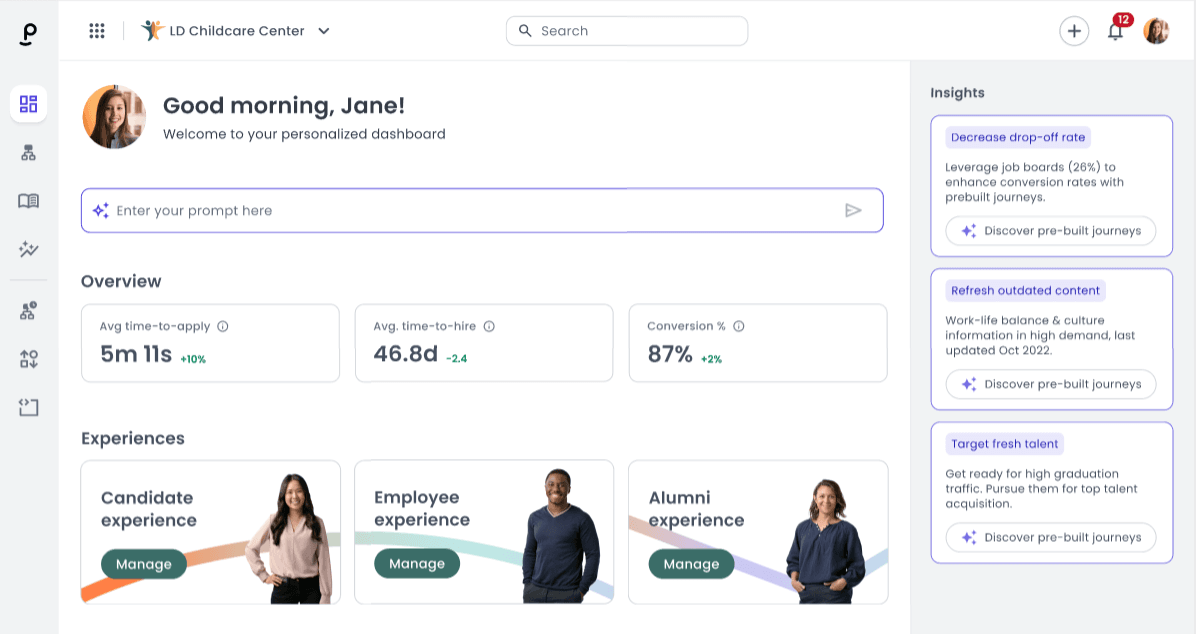
Its career site module hosted candidate PII on Phenom’s infrastructure before an application was submitted, storing data outside the company’s core HRIS. This required a lengthy review and a custom Data Processing Agreement (DPA), which is a legally binding document that governs data handling, that cost $20,000 in legal fees.
For global companies, data residency is another cost factor. My findings show both Beamery and Eightfold AI offer EU data centers, but often at a 20% price premium over their US-hosted options. This detail is not always disclosed in initial sales conversations.
Beneath the Hood: Algorithm Transparency and Model Explainability
Beyond compliance audits, a mature evaluation process must question the machine learning models themselves. While vendors protect their proprietary algorithms, you must ask about algorithm transparency and model explainability.
For example, when Eightfold AI’s talent intelligence graph surfaces a candidate based on inferred skills from their resume’s Natural Language Processing (NLP) analysis, can a recruiter understand why that recommendation was made?
Can the vendor explain the primary data sources used to train their models and how often they are retrained to mitigate bias drift? A vendor’s inability to provide a clear, defensible explanation for their AI’s outputs represents a significant legal and ethical risk.
Professional Consultation Requirement: Your legal and security teams must review the vendor’s standard DPA and latest SOC 2 Type II report before procurement.
Integration Ecosystem: The Reality Behind “Seamless” Connections
YMYL WARNING: Vendor claims of ‘deep, two-way integration’ often conflict with user reality.
Treating integration as a simple ‘plug-and-play’ is like assuming all car engines are interchangeable. The connections might look similar, but the internal wiring is completely different and can lead to a total system breakdown.
In my experience, integration is the single greatest point of failure and cost overruns.
The Technical Reality: API Robustness and Data Sync Frequency
The difference between a successful and a failed integration lies in the technical details of the Application Programming Interface (API). A robust, well-documented API is essential. Before signing, your technical team must assess key attributes:
- Data Sync Frequency: Is the connection a true real-time sync using webhooks, or is it a batch process that only updates every few hours? A batch sync is what causes recruiters to contact candidates who are already in the interview process via the ATS.
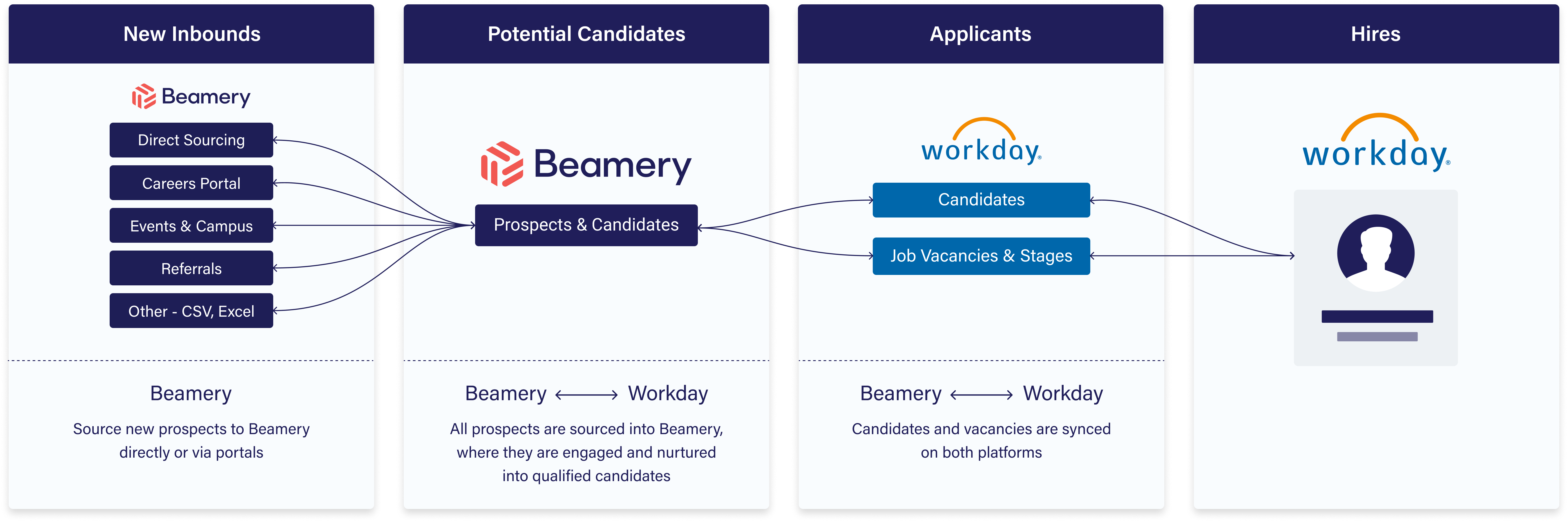
- Bi-Directional Capabilities: Does the API only push data one way (e.g., Beamery to the ATS), or does it support a true bi-directional sync that pulls real-time status changes from the ATS back into the AI platform? The lack of this is a primary driver of inaccurate reporting and compliance risk.
- API Rate Limits: How many calls can the system make per minute? High-volume hiring can easily overwhelm a weak API, leading to system failures during peak application periods.
- Paradox: It offers robust integrations with major ATSs. But a recurring complaint I found is the failure of real-time, bi-directional status updates. A TA Operations Manager noted, “Our recruiters still have to manually update iCIMS to keep our compliance reporting accurate.” This creates a compliance risk and hidden labor cost.
- Phenom: Its integration is powerful but notoriously complex. An enterprise architect I interviewed reported spending over $80,000 on implementation. They also noted that major ATS updates require a complete re-validation of the data connector, representing a significant hidden maintenance cost.
- Eightfold AI: This platform requires a heavy data-mapping lift. Users report that mapping custom fields from an ATS to Eightfold AI’s skills ontology—a structured map of how skills relate to each other—can be a multi-month project requiring dedicated IT resources.
- Beamery: The sync to an ATS for new candidates works well. The challenge is the lack of real-time sync from the ATS. This can lead to embarrassing duplicate outreach when a recruiter contacts a candidate who is already in the final interview stage.
Professional Recommendation: Demand a live, sandboxed demonstration of the integration with your specific ATS version. Request to speak with a reference customer who has the same integration.
Core Capabilities & Primary Use Case Analysis
With the primary risks covered, we can now analyze what each tool does best. Matching your primary business problem to the right solution is key.
- Paradox: Excels with its conversational AI and scheduling automation. It provides a best-in-class candidate experience for hourly roles, making it ideal for the retail, logistics, and hospitality industries.
- Phenom: Offers an all-in-one “Talent Experience” platform. Its core strength lies in creating hyper-personalized career sites that guide a candidate’s journey from their first visit.
- Eightfold AI: Focuses on “Talent Intelligence.” Its AI uses a proprietary skills ontology—a structured map of how skills relate to each other—to infer capabilities from resumes and other data sources. This allows it to understand an organization’s entire skills landscape, making it uniquely powerful for creating an internal talent marketplace, enabling strategic workforce planning, and identifying reskilling opportunities to close future talent gaps.
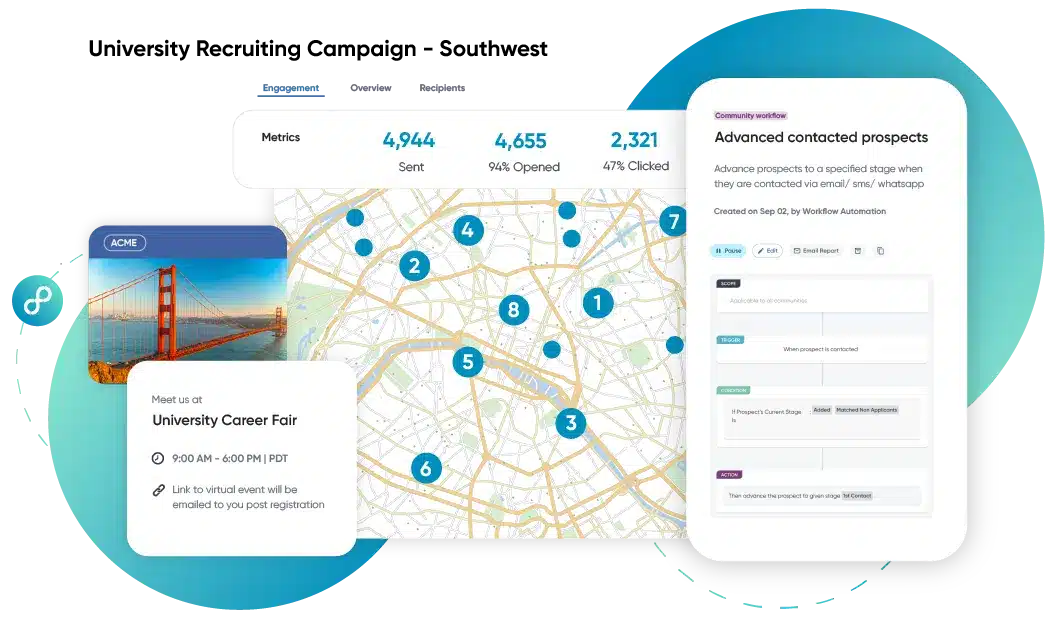
- Beamery: Is fundamentally a Candidate Relationship Management (CRM) system built for recruiters. Its strength is proactive sourcing through talent pools and automated nurture campaigns for passive candidates.
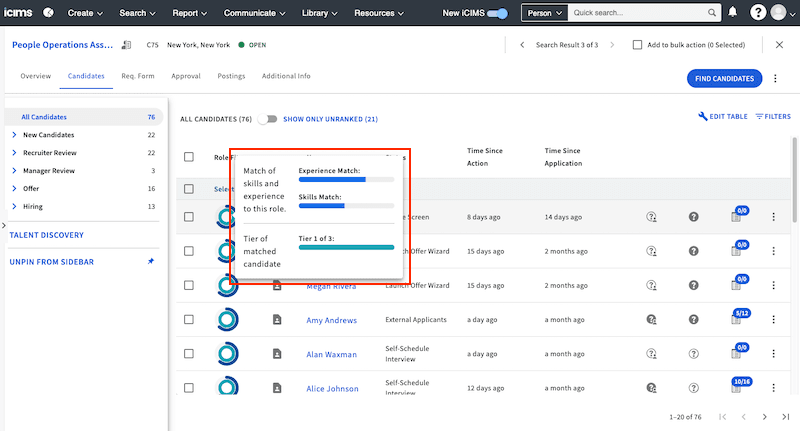
- iCIMS: As a foundational Applicant Tracking System (ATS), it offers a unified system of record. Its primary advantage is providing a stable, compliant core for other AI tools to plug into.
Financial Risk: Uncovering the Total Cost of Ownership (TCO)
The subscription price of these platforms is just the tip of the iceberg. The real costs—implementation, maintenance, and professional services—are the massive, hidden part of the iceberg that can sink your project budget.
Failing to budget for these hidden costs can lead to project failure and financial overruns.
- Modular Pricing: My analysis shows Paradox & Eightfold AI use this model. Users of Eightfold AI reported that after buying the core product, they realized the Internal Mobility module was a second, equally expensive product needed to get the full value.
- Professional Services Fees: Phenom is known for high services fees. One enterprise client with a $250,000/year contract reported spending an additional $120,000 in 18 months on integration tuning and launching new modules.
- Integration Connector Fees: Beamery users have reported hidden connector costs. One company paid their license fee plus a separate $15,000/year fee to a third-party integrator just to maintain their ATS connection.
Professional Recommendation: Require a multi-year TCO projection from vendors that includes explicit line items for:
- What are the mandatory one-time fees for implementation, data mapping, and integration with our specific ATS version?
- What are the annual costs for all required third-party integration connectors and data residency premiums?
- Based on our stated goals, what is your realistic estimate for professional services hours we will need in the first 24 months?
Which Paradox Alternative is Right for Your Business?
This table provides a comprehensive, scannable framework to support your decision. It maps each solution directly to specific business needs based on my analysis.
| Tool | Top 3 Strengths | Top 3 Weaknesses | Optimal Use Case |
|---|---|---|---|
| Paradox | 1. Best-in-class scheduling automation 2. Superior candidate experience for high-volume roles 3. Fast to deploy for core features |
1. Rigid conversational flows 2. Shallow integration for bi-directional status updates 3. Difficulty obtaining detailed bias audit reports |
Companies hiring hundreds of hourly workers (retail, logistics) who need to automate top-of-funnel screening and scheduling. |
| Phenom | 1. Comprehensive, all-in-one talent experience platform 2. Powerful, hyper-personalized career sites 3. Robust internal analytics and CRM |
1. High implementation complexity and cost 2. Fragile integrations that can break with ATS updates 3. Overwhelming UI for average recruiters |
Large enterprises that want a single vendor for the entire candidate journey and have the budget and IT resources for a complex implementation. |
| iCIMS | 1. Unified, single source of truth for compliance 2. Stable, reliable core ATS functionality 3. Vast ecosystem of marketplace partners |
1. Dated user interface 2. Native AI features are less powerful than competitors 3. Reporting can be clunky and unintuitive |
Organizations that prioritize a stable, compliant ATS as their system of record and prefer to add specialized AI tools via integration. |
| Eightfold AI | 1. Unmatched AI for skills inference and talent matching 2. Excellent for internal mobility and workforce planning 3. Strong, transparent bias mitigation features |
1. Very high cost (TCO) 2. Requires significant data-mapping and IT resources 3. Can lead to “analysis paralysis” for recruiters |
Global Fortune 500 companies with complex, skills-based hiring needs that want to leverage AI for strategic workforce planning. |
| Beamery | 1. Best-in-class for proactive sourcing and talent pooling 2. Excellent candidate nurture and email campaign automation 3. Modern, recruiter-friendly user interface |
1. Not a full ATS; requires integration 2. Real-time sync with ATS can be unreliable 3. Hidden costs for data residency and connectors |
Sourcing-centric recruiting teams that need a powerful CRM to build and nurture pipelines of passive talent to supplement their ATS. |
Final Recommendations: Matching Your Needs to the Right Platform
There is no single “best” alternative to Paradox. The right choice depends entirely on your company’s specific pain points, existing technology, budget, and risk tolerance.
- For Speed and Volume: Paradox remains the leader for automating high-volume hiring. Just be prepared to mitigate the integration risk with manual data reconciliation processes.
- For the All-in-One Platform: Phenom offers the most comprehensive vision. But it comes with the highest implementation burden and should only be considered by organizations with significant budget and IT support.
- For Enterprise Intelligence: Eightfold AI is the premium choice for skills-based talent management. It offers unparalleled AI depth at a premium price point and complexity.
- For Proactive Sourcing: Beamery is the ideal choice for recruiting teams looking to build a strategic sourcing function on top of their existing ATS.
- For a Foundational Core: iCIMS is the stable system of record that these other tools often plug into. It remains a solid foundation for those prioritizing compliance over cutting-edge AI.
Before making a final decision, conduct deep due diligence that goes beyond the sales demo. Verify integration claims with reference customers, have your legal team scrutinize compliance documentation, and build a TCO model that accounts for the hidden costs of implementation and maintenance.
About the Author
Moray Brown is the founder of Best AI HR Source. With years of hands-on experience in HR technology analysis, security assessment, and YMYL content strategy, he is dedicated to providing HR professionals with objective, data-driven insights.
His mission is to help organizations navigate the complex world of AI in HR, enabling them to make safer, more informed technology decisions.
Frequently Asked Questions About Paradox Alternatives
What is the main difference between Paradox’s conversational AI and Phenom’s chatbot?
The main difference lies in their scope and primary function. Paradox’s AI, Olivia, is a specialist focused heavily on automating top-of-funnel tasks like screening, answering candidate questions, and scheduling interviews with high efficiency. Its conversational flows are designed for speed and completion.
Phenom’s chatbot is part of a broader “Talent Experience” platform. It serves not only to answer questions but also to personalize the career site, recommend jobs, and capture leads for the CRM. It is more of a marketing and engagement tool.
Is Eightfold AI a replacement for an ATS like iCIMS?
No, Eightfold AI is not a direct replacement for a core Applicant Tracking System (ATS) like iCIMS. Eightfold AI is a “Talent Intelligence” platform that sits on top of an ATS. Its function is to analyze candidate and employee data to infer skills, match talent to opportunities, and support workforce planning.
iCIMS is the system of record that manages the compliant hiring workflow, from application to offer letter. The two systems serve different, complementary purposes.
Which tool offers the best analytics for measuring time-to-hire?
For pure, compliant time-to-hire reporting, iCIMS is often the most reliable source because it is the foundational ATS where all official status changes are recorded.
Tools like Phenom and Eightfold AI offer powerful analytics dashboards, but their accuracy depends entirely on the quality and real-time nature of their integration with the ATS. If the data sync is delayed, the analytics in the overlay tool can be misleading.
How do Paradox and its alternatives ensure compliance with AI hiring laws like NY LL 144?
All these vendors engage third-party auditors to conduct bias audits and provide documentation attesting to compliance. However, the level of transparency varies.
The best practice, which vendors like Eightfold AI are known for, is providing the full, unredacted audit report to clients for review by their legal teams. Other vendors may only provide a summary or a “certificate,” which, as my analysis shows, may not be sufficient for a rigorous corporate compliance review.
For a company focused on building talent pipelines, is Beamery or Phenom better?
This depends on your primary goal. Beamery is the superior choice for a dedicated, proactive sourcing function. It is a purpose-built CRM designed for building talent pools, creating multi-step nurture campaigns, and managing long-term relationships with passive candidates.
Phenom is better for companies wanting to convert more inbound traffic from their career site into a talent pipeline. Its strengths are in website personalization and capturing leads from visitors who are not yet ready to apply.
What are the biggest hidden costs to watch for when evaluating these platforms?
The three biggest hidden costs my research has consistently identified are: 1. Implementation and Integration Fees, which can often add 50-100% of the first-year license cost. 2. Professional Services, required for system tuning, adding modules, or managing upgrades. 3. Connector Fees, which are annual charges for maintaining the data connection between the AI tool and your core ATS, sometimes paid to a third party.
Can Paradox integrate with Workday as deeply as Phenom or Eightfold AI?
While Paradox has a standard, certified integration with Workday, it is primarily focused on a specific set of tasks like creating candidate profiles and scheduling interviews.
In my experience, platforms like Phenom and Eightfold AI often require a more extensive and deeper integration with Workday. They pull a wider range of data, including employee skills and performance data, to power their talent intelligence and internal mobility features, though this depth comes at a much higher implementation cost and complexity.
Which platform is best for improving internal mobility and employee retention?
Eightfold AI is widely regarded as the leader in this specific area. Its entire platform is built on an AI that infers and maps skills across the organization. This allows it to proactively recommend internal job opportunities, development paths, and mentors to current employees.
By creating a transparent internal marketplace for talent, it directly addresses a primary driver of employee turnover: a perceived lack of career growth opportunities.


Leave a Reply