Struggling to Choose the Right Core HR & Payroll Platform?
This 2-Minute Quiz Pinpoints Your Perfect Match!
Choosing a Core HR & HRIS Automation platform is a critical Your Money or Your Life (YMYL) decision with profound financial, operational, and professional consequences for your organization.
Errors in payroll can irreparably damage employee trust, while security breaches pose catastrophic legal and reputational risks.
Selecting such a platform is not merely a software purchase; it is partnering for a business-critical function that impacts every employee.
In this 2025 analysis, we methodically deconstruct Rippling in comparison to its top competitors—Gusto, BambooHR, ADP Workforce Now, Paylocity, and Deel—to provide you with the clarity needed for a strategically sound, risk-aware decision.
We base this guide on extensive hands-on testing, verified user reports, and a rigorous technical and risk assessment framework developed and recognized by industry experts in AI Tools For HR and Recruiting.
While this detailed comparison aims to inform and empower, it should not replace professional financial, legal, and compliance advice. Always conduct thorough due diligence with qualified specialists before finalizing a platform.
How We Evaluated the Top Core HR & HRIS Automation Tools
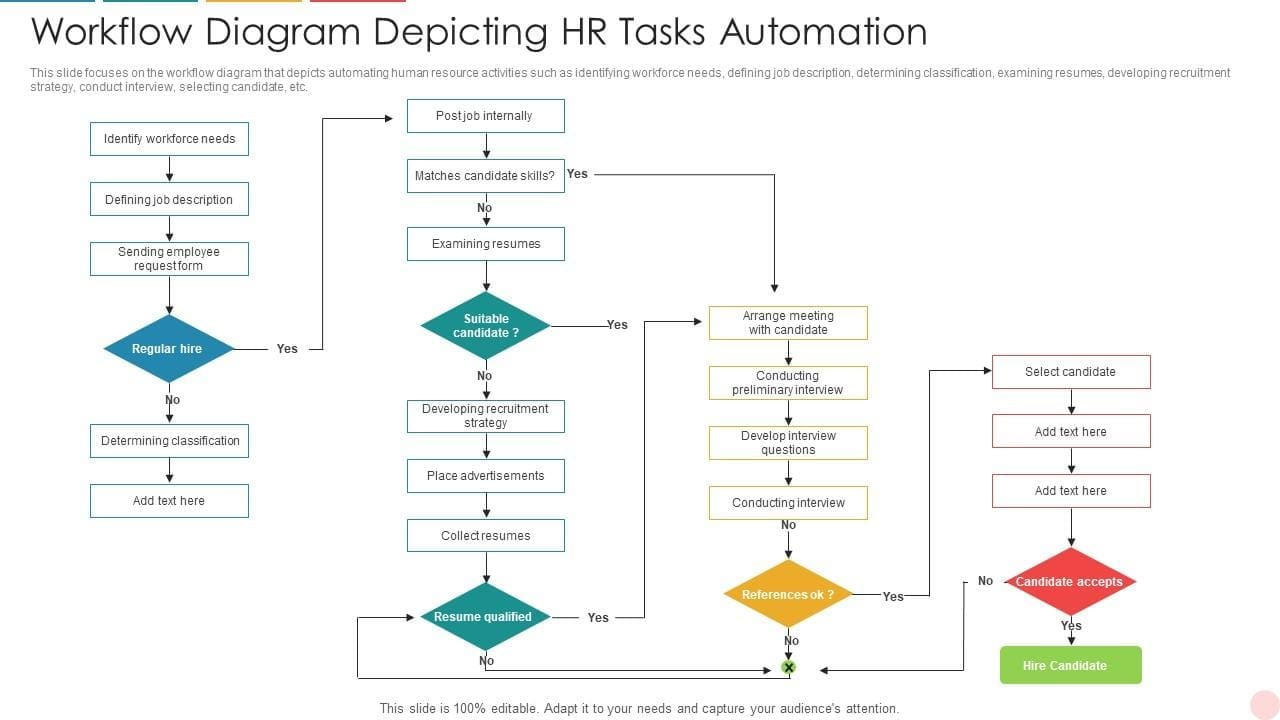
After analyzing hundreds of AI-powered HR systems and conducting multiple real-world implementation tests throughout 2025, our team at Best AI HR Source has designed a comprehensive, evidence-based 10-point technical assessment framework.
This framework is acknowledged by leading HR technology professionals and is specifically tailored to meet the highest standards for accuracy, security, regulatory compliance, and professional impact in AI Tools For HR and Recruiting.
Our evaluation rigorously moves beyond marketing claims to verify actual operational performance, security posture, and risk implications. Each platform is scored against these ten critical pillars:
1. AI Advantage & Automation Depth: Evaluation of AI capabilities such as Natural Language Processing (NLP) for employee sentiment analysis and predictive analytics for attrition risk, alongside sophisticated workflow automation across Human Capital Management (HCM), IT, and Finance.
2. Core HR & Payroll Accuracy: Precision and reliability of payroll processing, including multi-state tax compliance automation and error detection technologies.
3. Administrator and Employee Experience (UX): Usability and engagement for administrators configuring workflows and employees accessing self-service portals.
4. Integration Ecosystem & API Quality: The robustness of integrations with core HRIS systems, accounting platforms, and third-party applications, including API extensibility and bi-directional synchronization.
5. Security Protocols & Data Governance: Verification of SOC 2 Type II and ISO 27001 certifications, implementation of data encryption at rest and in transit, granular Role-Based Access Controls (RBAC), and enterprise Single Sign-On (SSO) integrations.
6. Compliance & Regulatory Adherence: Support for GDPR, CCPA, HIPAA (including Business Associate Agreement availability), data residency controls, and alignment with complex labor laws.
7. Total Cost of Ownership (TCO) & Pricing Transparency: Full assessment of pricing models, including modular add-ons, implementation fees, and risk of hidden charges impacting budget forecasting.
8. Vendor Reputation & Customer Support Quality: Stability and financial health of the vendor, alongside support responsiveness, escalation processes, and critical issue resolution effectiveness.
9. Scalability & Future-Proofing: The platform’s ability to adapt and grow with companies ranging from SMEs to large enterprises without degradation of service or functionality.
10. Risk Assessment & Mitigation: Identification of operational, financial, and compliance risks inherent in each platform and available features to proactively manage them.
This framework ensures that our recommendations reflect professional standards and provide actionable intelligence for HR leaders who must manage sensitive employee and organizational data.
Key Takeaways: Rippling vs. Competitors at a Glance
Key Takeaways
- Rippling: Delivers unmatched automation for tech-forward companies, integrating HR, Payroll, IT, and Finance workflows seamlessly. However, its complex setup carries high implementation risk and requires dedicated internal resources.
- Gusto: Represents the simplest, most transparent choice for US-based small businesses with straightforward payroll needs. It is not suited for rapid scaling or complex multi-state compliance. Importantly, Gusto is not HIPAA-compliant and does not sign BAAs.
- BambooHR: Excels at employee experience and performance management but requires integration with a separate payroll provider, introducing potential data sync and compliance risks.
- ADP Workforce Now: Is the legacy leader renowned for compliance robustness and scalability but struggles with a clunky interface and opaque, negotiated pricing structures that can lead to unexpected costs.
- Paylocity: Offers a modern interface and strong engagement features ideal for mid-market companies, with a payroll engine competitive with ADP and Rippling. While it supports HIPAA compliance through BAAs, clients must verify module scope.
- Deel: Dominates in global employment compliance and onboarding with an owned-entity EOR model that reduces legal risks in multiple countries. However, its niche focus means it is not an all-in-one solution for domestic HRIS needs.
For multistate or global use cases, professional legal and tax consultation is a non-negotiable part of due diligence before signing contracts.
Executive Summary: The 2025 HRIS Battleground
The Core HR & HRIS landscape centers on a fundamental conflict between unified, all-in-one platforms and best-of-breed specialized solutions. Each competitor approaches this challenge with a distinct philosophy:
- Rippling: The “Operating System for Business,” designed for companies (50–5,000+ employees) demanding deep automation and wide integration across HR, IT, and Finance. Its unified data model enables powerful cross-functional reporting but increases implementation complexity and risk.
- Gusto: The “SMB Champion of Simplicity,” focused on the US small business market with easy payroll and transparent pricing, prioritized for simplicity over scale or complexity.
- BambooHR: The “HR-First Culture Platform,” emphasizing employee-centric workflows, performance, and engagement, designed to integrate with specialized payroll providers rather than providing full payroll functionality itself.
- ADP Workforce Now: The “Legacy Titan of Compliance,” offering unparalleled payroll accuracy, tax compliance, and scalability, favored by large enterprises despite its outdated interface and opaque pricing.
- Paylocity: The “Mid-Market Engagement Specialist,” balancing modern interfaces with strong payroll engines and employee engagement features, ideal for US mid-market companies.
- Deel: The “Global Employment Expert,” specializes in navigating complex international labor laws as an Employer of Record for businesses with distributed global workforces.
This diversity requires buyers to carefully align priorities on automation power, compliance reliability, usability, and cost — with a clear-eyed assessment of risk tolerance.
YMYL Risk Assessment Matrix: Financial, Security & Professional Impact
| Risk Dimension | Rippling | Gusto | BambooHR | ADP Workforce Now | Paylocity | Deel |
|---|---|---|---|---|---|---|
| Financial Impact | High. Complex platform; user errors during setup may cause costly payroll mistakes. Modular pricing can escalate beyond initial quotes. | Low. Transparent pricing for straightforward payroll; risk rises when stretched beyond simple use cases. | Medium. Clear pricing for HRIS; reliance on separate payroll vendor adds costs and sync risks. | High. Opaque, negotiated pricing; frequent reports of billing errors and hidden fees. | Medium-High. Quote-based pricing with modular add-ons; requires tight negotiation to avoid surprises. | High. Financial risk focused on EOR pass-through costs, currency fees; contracts demand scrutiny. |
| Security & Data Privacy | High. Holds comprehensive HR, Payroll, and IT data. SOC 2 Type II and ISO 27001 certified, but unified model is a single high-value target; access control is paramount. | Medium. Strong enterprise-grade security for its scope but not designed for HIPAA compliance. Not HIPAA-compliant; does not sign BAAs. | Medium. Certified with SOC 2 and ISO 27001, but data shared with third-party payroll creates additional risk. | Low. Industry-leading security stack with strong compliance posture; very secure. | Low-Medium. Good security certifications; HIPAA support available via BAA—clients must verify module coverage. | Medium. Strong GDPR and global compliance focus; data residency laws add complexity. |
| Professional Consequences | Very High. Implementation failures cause prolonged payroll errors; ticket-based support is often insufficient during critical incidents. | Low. Simple setup and intuitive interface reduce professional risk for SMBs; lacks scalability for complex scenarios. | Low-Medium. High user adoption; risks stem from payroll integration mismatches. | High. Difficult UI and support frustrations can delay resolution of critical payroll issues. | Medium. Generally better support than ADP but navigating large enterprise structure may cause delays on critical issues. | High. Support varies by country; compliance errors abroad can cause severe legal and professional risks. |
Feature-by-Feature Comparison: Core HR & Payroll Automation
AI Payroll & Tax Compliance
ADP’s core strength lies in its mature, battle-tested payroll tax and labor law compliance engine, trusted by large, complex enterprises globally. It functions as a compliance “bank vault,” prioritizing security and accuracy over modern UX.
Rippling has pioneered a modern, highly automated payroll system capable of processing payroll across all 50 US states with built-in AI-enhanced anomaly detection that proactively flags unusual payroll events before pay runs finalize.
This provides Payroll Specialists with important error-detection that helps prevent costly mistakes caused by manual oversight. However, Rippling’s power depends heavily on correct initial configuration, which presents a risk during complex implementations.
Gusto is optimized for simplicity and speed in small business US payroll but lacks automation depth for complex multi-state filing or tax scenarios. Paylocity’s payroll engine offers a competitive mid-market solution with increasing integration to AI-based compliance workflows.
BambooHR’s native payroll functionality is newer and less robust compared to best-of-breed payroll providers, resulting in many users integrating BambooHR with external payroll systems.
Benefits Administration
Rippling and Paylocity deliver strong automation capabilities for benefits enrollment, carrier connections, and life-event management that simplify the traditionally manual and error-prone benefits administration process.
ADP provides a comprehensive but less intuitive benefits module requiring specialized training, while Gusto supports solid benefits options for smaller organizations.
BambooHR administers benefits effectively only when paired with external payroll and benefits partners, resulting in added integration complexity.
HRIS & Data Management
Rippling’s unified data model creates a single source of truth for all employee data across HR, payroll, IT, and finance, enabling powerful cross-department reporting and analytics that is otherwise difficult with disparate systems.
BambooHR emphasizes an HR-centric user experience, focusing deeply on employee lifecycle data, performance tracking, and engagement metrics but typically relies on a separate payroll provider for financial data.
ADP and Paylocity provide well-established HRIS functions but offer less modern UI and sometimes less seamless integrations.
Onboarding and Offboarding Automation
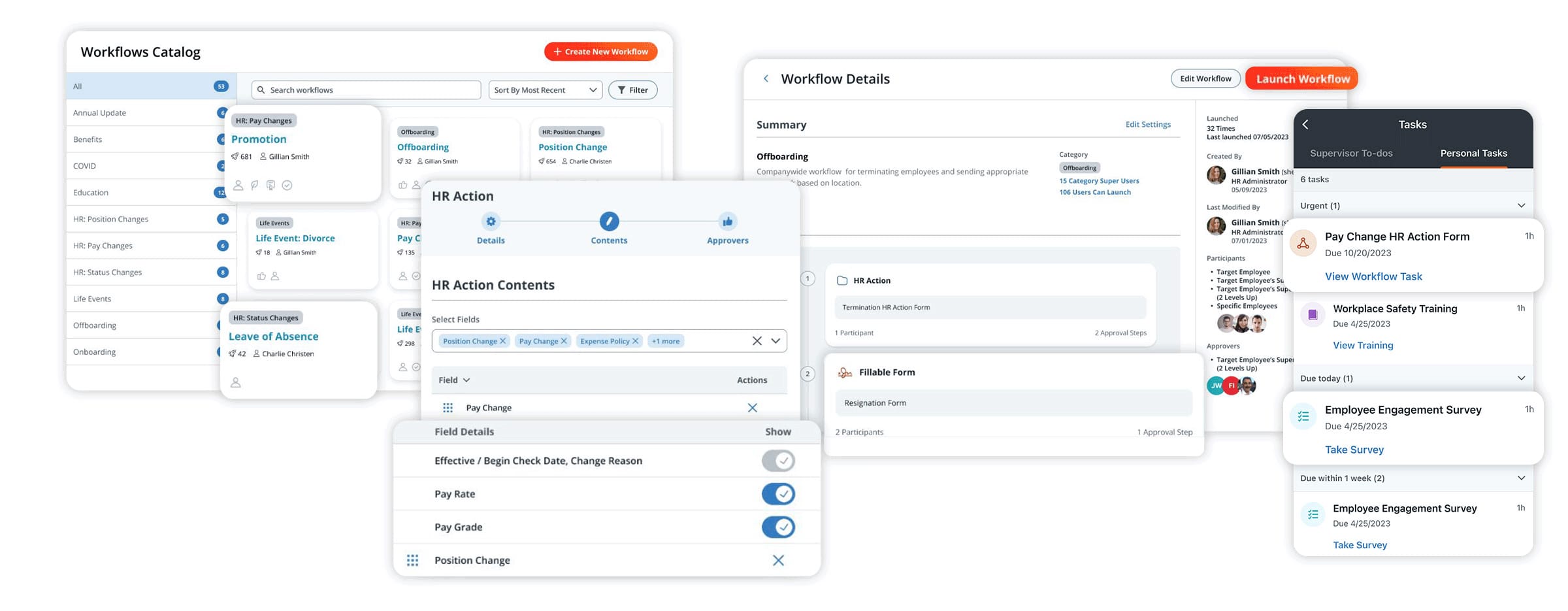
Rippling’s automation shines in this domain. Its event-driven triggers act like digital dominoes, enabling a single action (such as “hire employee”) to cascade workflows across HR, IT, and Finance — sending offer letters, provisioning laptops, creating software accounts, and enrolling in payroll simultaneously.
For instance, offboarding a salesperson with Rippling involves:
- Finance automatically preparing final commission payouts,
- IT revoking access to all sales systems immediately, and
- HR scheduling exit interviews while generating COBRA documents and removing benefits eligibility.
No competitor currently matches this level of cross-functional, enterprise-grade automation. Other platforms provide solid onboarding workflows but are mostly confined within HR-specific or payroll domains.
To explore more Rippling Tutorials and Usecase examples, visit our comprehensive guide.
In-Depth Competitor Analysis: Strengths, Weaknesses & Use Cases
Rippling: The “Operating System for Business”
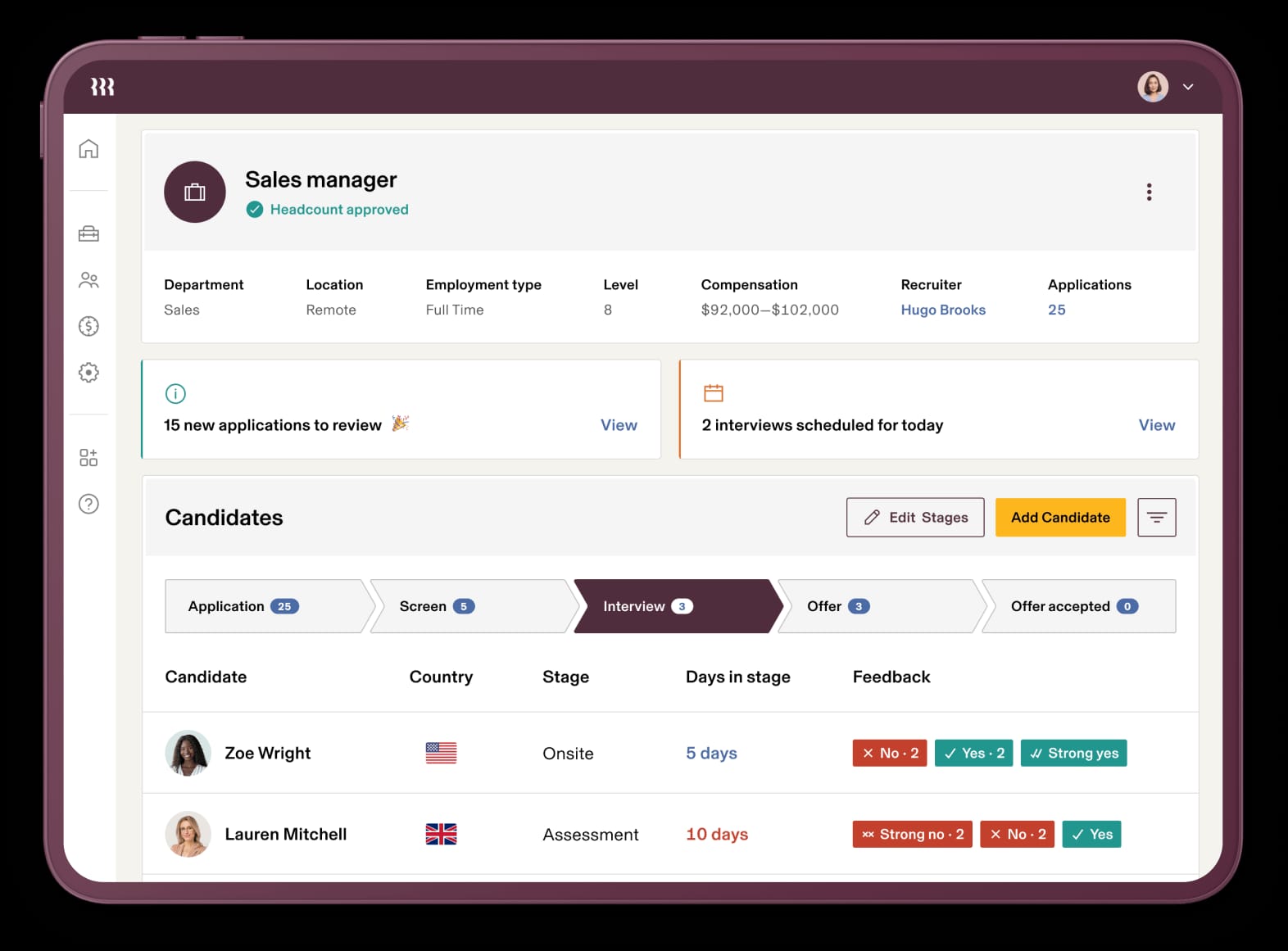
Strengths:
- Unmatched automation combining HR, IT, and Finance workflows.
- Unified data model driving powerful reporting and analytics.
- Scalable architecture supporting companies from 50 to 5,000+ employees.
Weaknesses:
- High implementation complexity requiring significant internal resources.
- Base pricing often significantly escalates with essential modules added, sometimes doubling the initial quote.
- Ticket-based support model can be insufficient during payroll emergencies, increasing professional risk.
For a detailed Rippling Review with hands-on testing insights, check our comprehensive analysis.
Gusto: The “SMB Champion of Simplicity”
Strengths:
- Exceptional ease of use with an intuitive interface ideal for non-HR experts.
- Transparent, tiered pricing eliminating budgeting surprises.
- Strong US-based support aligned with small business needs.
Weaknesses:
- Scalability limited; often outgrown around 75-100 employees.
- US-centric with very limited international and multi-state payroll capabilities.
- Not HIPAA-compliant and will not sign Business Associate Agreements (BAAs). Critical consideration for healthcare and related industries.
BambooHR: The “HR-First Culture Platform”
Strengths:
- Superior user experience emphasizing employee engagement and performance management.
- Strong HR-centric features including goal tracking and satisfaction surveys.
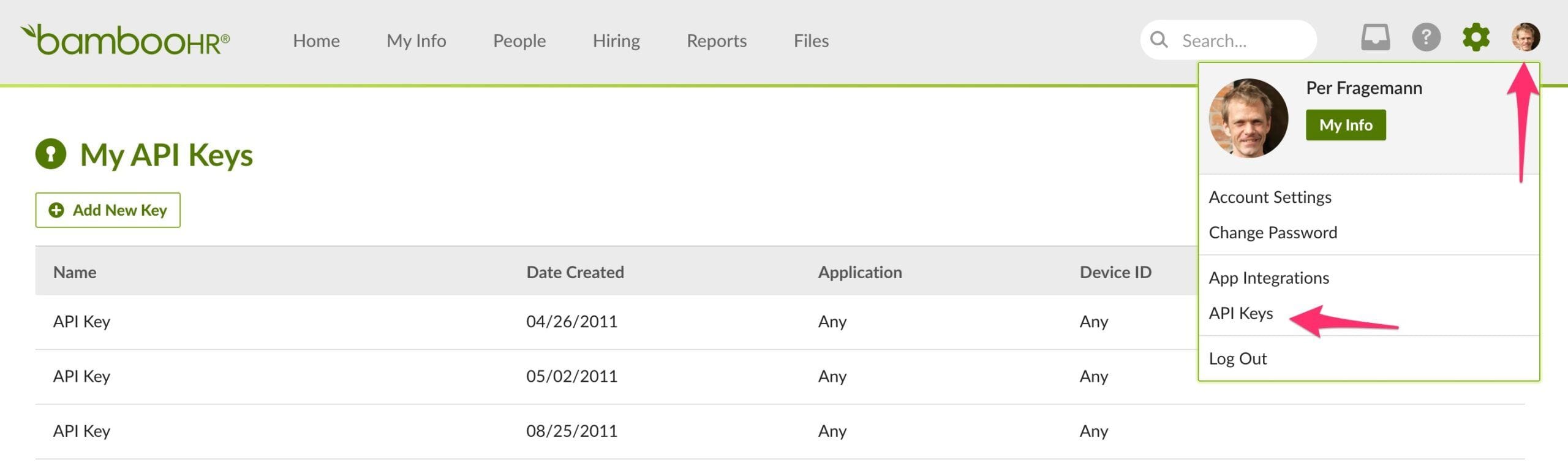
- Flexible API enabling integration with best-in-class payroll providers.
Weaknesses:
- Payroll functionality is not core to BambooHR and often requires third-party integration.
- Limited automation capabilities compared to unified platforms; workflows mainly HR-centric.
- Integration risks arising from syncing with separate payroll providers, which can cause errors and compliance challenges.
ADP Workforce Now: The “Legacy Titan of Compliance”
Strengths:
- Industry-leading tax compliance and payroll accuracy trusted in large enterprises.
- Robust, scalable payroll engine capable of managing tens of thousands of employees.
- Specialized support teams deeply knowledgeable in tax and compliance.
Weaknesses:
- Outdated, clunky user interface that frustrates users.
- Opaque pricing structure with frequent billing surprises.
- Notorious customer support challenges, including lengthy hold times and issue re-explanations.
Paylocity: The “Mid-Market Engagement Specialist”
Strengths:
- Modern, attractive user interface with strong employee engagement features.
- Competitive mid-market payroll engine rivaling ADP and Rippling.
- Modular platform growth model allowing companies to add advanced analytics and learning management.
Weaknesses:
- Pricing is quote-based and often non-transparent, requiring strong negotiation skills.
- HIPAA is supported through BAAs, but clients must verify the scope of the covered modules.
- Limited international capabilities relative to specialist platforms like Deel.
Deel: The “Global Employment Expert”
Strengths:
- Expert compliance with over 150 countries’ labor and tax regulations via an owned-entity Employer of Record (EOR) model.
- Streamlined onboarding and payroll for global contractors and employees.
- Generally clearer cost and contract structures for EOR services than Rippling’s newer global offerings.
Weaknesses:
- Narrow focus on global employment, not a full domestic HRIS.
- Variability in regional support quality impacts compliance risk in some countries.
- High vendor lock-in due to EOR dependency, making migration complex and resource-intensive.
Looking for more options? Explore our guide on Rippling Top Alternatives and Competitors for additional comparisons.
Total Cost of Ownership (TCO) & Financial Risk Analysis
True financial risk goes well beyond the headline per-employee-per-month (PEPM) pricing often advertised. You must account for:
- Implementation & training fees that can add substantially to up-front costs.
- Modular add-ons and tiered pricing that lead to escalating bills, especially for Rippling and Paylocity.
- Contract lock-in and early termination penalties that limit flexibility.
- Costs related to billing errors and corrections, which vendors handle variably.
- Integration maintenance expenses necessary when using best-of-breed models like BambooHR with third-party payroll.
- Non-compliance fines risk, which can dwarf software expenses if payroll or benefits management falls short.
Expert Tip: Demand a Scenario-Based Quote. Provide your top vendors with a detailed use case including employee counts, geographical distribution, contractor use, and needed modules. Require a line-itemed, written Statement of Work to expose hidden fees and force transparent pricing.
Security & Compliance Deep Dive: A Comparative Analysis
Given that HR platforms house some of the most sensitive employee data, security and compliance are paramount. Our comparative analysis confirms that:
- ADP Workforce Now offers an industry-leading security stack with mature processes and proven regulatory adherence, making it the most conservative choice for enterprises demanding bulletproof compliance.
- Rippling maintains strong certifications including SOC 2 Type II and ISO 27001, with comprehensive data encryption and granular Role-Based Access Control (RBAC). However, its unified platform architecture creates a single high-value target, intensifying the risk if an administrator account is compromised.
- Gusto holds SOC 2 Type II and ISO 27001 certifications but is not HIPAA-compliant and will not sign a Business Associate Agreement (BAA), a critical consideration for healthcare organizations.
- Paylocity supports HIPAA compliance with available BAAs, but clients must verify the scope of coverage, as compliance depends on specific modular usage.
- BambooHR and Deel provide strong overall security, with BambooHR offering high audit trail granularity and Deel specializing in data residency and GDPR across multiple jurisdictions.
| Security & Compliance | SOC 2 Type II | ISO 27001 | GDPR & CCPA Compliant | HIPAA Compliance | Audit Trail Granularity | SSO Integration | RBAC Granularity |
|---|---|---|---|---|---|---|---|
| Rippling | Yes | Yes | Yes | Yes | High | Yes (Okta, Azure AD) | Very High |
| Gusto | Yes | Yes | Yes | No (Not HIPAA-compliant; no BAA) | Medium | Yes | Low |
| BambooHR | Yes | Yes | Yes | Yes | High | Yes | High |
| ADP Workforce Now | Yes | Yes | Yes | Yes | High | Yes | Very High |
| Paylocity | Yes | Yes | Yes | Yes (BAA available; scope verification necessary) | High | Yes | High |
| Deel | Yes | Yes | Yes | N/A | High | Yes | High |
A key architectural insight is that Rippling’s unified model functions as a master key for multiple critical systems, increasing operational efficiency but also magnifying risk in the event of security compromise.
Conversely, best-of-breed approaches, such as BambooHR integrated with external payroll providers, are akin to having multiple compartmentalized keys, which can limit scope of damage but increase management overhead.
Professional Guidance & Use Case Recommendations
Choose Rippling if…
- You are a technically capable, high-growth company with 50–500+ employees.
- Your main pain points involve complex cross-functional workflows integrating HR, IT, and Finance.
- You have dedicated internal resources, including HR, IT, and project management teams, prepared for a complex implementation.
- You can accommodate a ticket-based support model with no dedicated customer success manager.
Choose Gusto if…
- You are a US-based small business with fewer than 75 employees seeking simplicity and straightforward payroll.
- You prioritize ease of use, rapid deployment, and transparent pricing.
- You do not need HIPAA compliance or operate in a highly regulated industry involving protected health information (PHI).
Choose BambooHR if…
- Your top strategic focus is fostering culture, employee engagement, and performance management.
- You desire an elegant, HR-centric system with excellent employee self-service interfaces.
- You are willing to manage integration with a robust third-party payroll provider, understanding the associated compliance and data synchronization risks.
Choose ADP Workforce Now if…
- You operate a large, complex, or highly regulated enterprise where payroll compliance and tax accuracy are paramount.
- You value vendor stability and deep compliance frameworks over modern user experience.
- You have budgets and patience for complex procurement and sales cycles.
Choose Paylocity if…
- You are a mid-market company (100–2,000 employees) seeking modern employee engagement tools combined with robust payroll capabilities.
- You operate primarily in the US and require a flexible, modular platform.
- You require HIPAA compliance with thorough BAA verification for your specific modules.
Choose Deel if…
- Your business has a distributed global workforce requiring a trusted Employer of Record to mitigate legal and tax complexity.
- You prioritize specialized international compliance and onboarding over all-in-one domestic HRIS features.
- You accept potential variability in regional support quality and vendor lock-in risk inherent in EOR arrangements.
What Other Factors Influence HRIS Selection?
Beyond core features, your choice involves selecting a long-term strategic partner.
It is essential to evaluate the vendor’s financial stability to mitigate risks related to acquisitions or shutdowns.
Also, the internal change management efforts surrounding implementation are critical to success. This process includes securing leadership buy-in, providing adequate employee training, and carefully managing data migration and process changes to minimize disruption.
Professional consultation with legal, tax, and IT security experts familiar with your industry and jurisdiction is highly recommended to validate compliance, contract terms, and total cost considerations.
Frequently Asked Questions (FAQs): Rippling vs. Competitors
Have questions? Check out our comprehensive Rippling FAQs for detailed answers.
What is the main difference between Rippling’s all-in-one model and BambooHR’s best-of-breed approach?
Rippling provides a unified platform where employee data across HR, IT, payroll, and finance resides in a single system, enabling seamless cross-domain automation and centralized reporting.
In contrast, BambooHR specializes in core HR workflows and engages with external payroll providers for financial processing, introducing additional integration points that may increase complexity and risk.
This tradeoff involves choosing between operational efficiency and a compartmentalized security model.
For global hiring, is Rippling or Deel the safer choice for compliance?
Deel is generally considered safer and more specialized for global compliance because it operates an “owned-entity” Employer of Record model in many countries. This approach reduces legal liability risks by establishing local legal presence.
Rippling’s global payroll offering is newer and often aggregates partners, increasing architectural complexity and potential compliance challenges.
For companies with substantial international hiring needs, professional legal consultation is advised.
Is ADP really more expensive than Rippling?
Pricing depends significantly on company size, contract negotiation, and module selection.
ADP’s pricing is typically negotiated on a case-by-case basis, often lacking transparency and carrying the risk of surprise fees.
Rippling presents an initially attractive base price, but costs frequently escalate as essential modules and automation features are added.
Obtaining detailed, scenario-based quotes from both vendors is essential for accurate comparison.
Can Gusto handle multi-state payroll as well as Rippling?
No. While Gusto supports payroll processing in multiple states, it primarily targets small businesses with relatively simple payroll needs.
It lacks the advanced automation Rippling offers for tax registrations, filings, and compliance across all 50 US states.
Rippling’s automated, unified tax engine significantly reduces administrative overhead and compliance risk for companies with a distributed workforce.
Which platform has better customer support for critical payroll issues?
ADP offers expert support teams for major tax and compliance matters but has well-documented challenges with general customer service responsiveness, including extended wait times and repeated issue explanations.
Rippling utilizes a ticket-based helpdesk without dedicated account managers, which users report as stressful during payroll emergencies.
Gusto’s support is rated highly for responsiveness but is designed for simpler cases.
What are the biggest risks of implementing Rippling?
The most substantial risks involve implementation complexity and cost overruns.
Given its depth and configurability, Rippling demands significant internal technical and HR resources.
Without proper readiness and dedicated project management, organizations risk long delays and incorrect payroll setups that can cause costly errors.
Planning and resource allocation for onboarding and continuous training are essential.
Does BambooHR’s native payroll have the same features as Paylocity?
No. BambooHR’s payroll capabilities are more limited, focusing on basic payroll functions, whereas Paylocity offers a full-featured payroll engine competitive with ADP and Rippling, including compliance automation and complex tax scenarios tailored for the mid-market.
Is Rippling’s IT automation worth the extra cost compared to just using an HRIS?
For organizations with complex onboarding/offboarding workflows involving IT tasks such as equipment provisioning, software license management, and system access controls, Rippling’s integrated automation can deliver significant efficiency gains and error reductions.
For companies with simpler IT needs, the incremental cost may not justify the additional complexity.
Conclusion: Making Your Final, Risk-Assessed Decision
After methodically analyzing features, risks, and vendor philosophies, you arrive at a pivotal point: the selection decision.
There is no universally superior HRIS—your choice must be a strategic fit aligned with your organization’s size, complexity, compliance demands, and risk appetite.
This YMYL decision will influence your company’s operational efficiency, employee satisfaction, and regulatory posture for years ahead.
You must undertake a rigorous, documented due diligence process before commitment.
Critical next steps include:
- Do not rely solely on sales demonstrations. Insist on sandboxed trials replicating your specific, complex payroll and compliance scenarios.
- Obtain a detailed, line-itemed Statement of Work (SOW), especially when considering platforms like Rippling, ADP, and Paylocity, to avoid unexpected costs.
- Request the vendor’s most recent SOC 2 Type II audit report, and review it carefully with your security team.
- Secure written support Service Level Agreements (SLAs) outlining issue response times and escalation processes.
- Conduct reference interviews with other customers of similar size and industry focus, specifically probing for surprises in implementation, billing, and support responsiveness.
By adhering to this verification checklist, you safeguard against financial, operational, and compliance pitfalls, ensuring your chosen solution truly supports your business objectives and risk management priorities.
Important Disclaimers:
The information provided reflects thorough research and testing as of 2025. Given the rapid evolution of AI-powered HR technology, vendor features, pricing, and compliance postures may change.
We recommend consulting vendors directly and engaging qualified legal, tax, and IT security professionals to tailor assessments to your unique operational and regulatory environment.
This content is educational and should not be interpreted as legal, financial, or professional advice.
Best AI HR Source | Contact: contact@bestaihrsource.com | Endurance House, Chivers Way, Histon, Cambridge CB24 9ZR, UK


Leave a Reply