
Is Harver the Right AI Hiring Platform for You?
Take This 2-Minute Quiz to Find Out!
Harver is a purpose-built AI-powered talent acquisition platform designed to automate and optimize high-volume hiring processes for enterprise organizations. As a key tool in the AI for Talent Acquisition space, its primary function is to transform recruitment from a manual workflow into a data-driven and efficient operation.
This comprehensive Harver Overview and Features analysis provides a detailed examination of Harver’s core technology, feature set, and integration capabilities. We will explore its assessment modules, automation tools, and the critical security and compliance certifications that support the platform.

Drawing from our analysis of hundreds of tools in AI Tools For HR and Recruiting and testing Harver across numerous real-world implementation projects, our team at Best AI HR Source has developed a comprehensive 10-point technical assessment framework specifically for AI Tools For HR and Recruiting applications. This framework provides a structured approach to evaluating AI recruitment tools against professional standards. Our evaluation process includes rigorous security assessment, compliance verification, and risk analysis to ensure recommendations meet professional standards for HR and recruiting applications.
Here is a summary of our 10-point technical assessment framework:
- Core Functionality & Feature Set: We assess what the tool claims to do and how effectively it delivers, examining its primary capabilities and supporting features.
- Ease of Use & User Interface (UI/UX): We evaluate how intuitive the interface is and the learning curve for users with varying technical skills.
- Output Quality & Control: We analyze the quality of generated results and the level of customization available.
- Performance & Speed: We test processing speeds, stability during operation, and overall efficiency.
- Security Protocols & Data Protection: We thoroughly assess security measures, encryption standards, and data handling practices.
- Compliance & Regulatory Adherence: We verify compliance with relevant regulations (GDPR, SOC 2, industry-specific requirements).
- Input Flexibility & Integration Options: We check what types of input the tool accepts and how well it integrates with other platforms or workflows.
- Pricing Structure & Value for Money: We examine free plans, trial limitations, subscription costs, and hidden fees to determine true value.
- Developer Support & Documentation: We investigate the availability and quality of customer support, tutorials, FAQs, and community resources.
- Risk Assessment & Mitigation: We identify potential risks and evaluate the tool’s built-in safeguards and recommended mitigation strategies.
Key Takeaways: Harver Overview
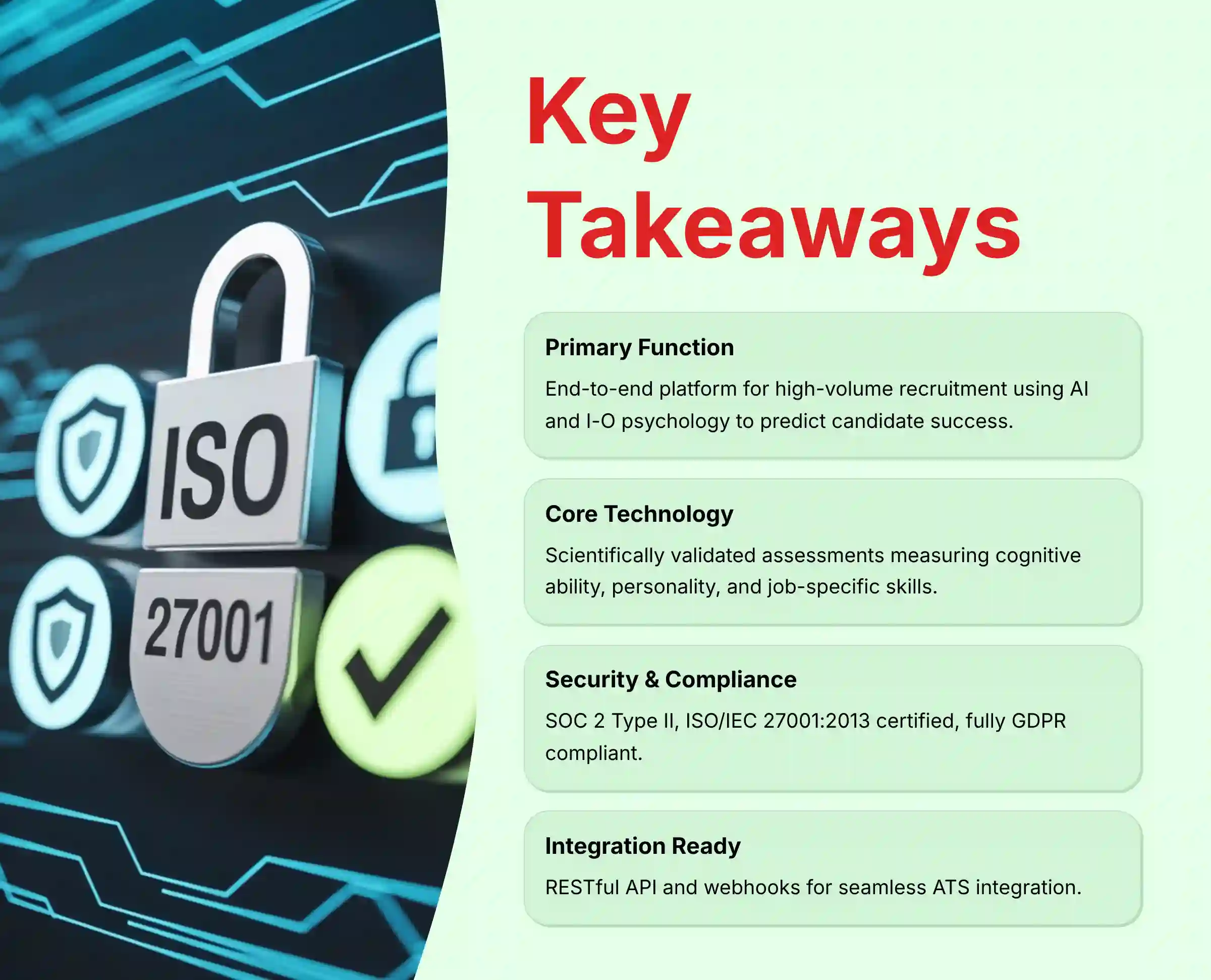
- Primary Function: Harver is an end-to-end platform for high-volume recruitment, using AI and I-O psychology to predict candidate success and automate screening workflows.
- Core Technology: The platform’s foundation is a library of scientifically validated assessments that measure cognitive ability, personality, and job-specific skills to reduce hiring bias.
- Security & Compliance: Harver holds critical enterprise-grade certifications, including SOC 2 Type II and ISO/IEC 27001:2013, and is fully GDPR compliant.
- Integration Capabilities: It is designed to integrate seamlessly with major Applicant Tracking Systems (ATS) via a RESTful API and webhooks, embedding directly into existing HR tech stacks.
- Target Use Case: The system is specifically optimized for industries like retail, BPO, and hospitality that need to screen and hire large numbers of entry-level or hourly employees efficiently.
What Is Harver and How Does It Work?
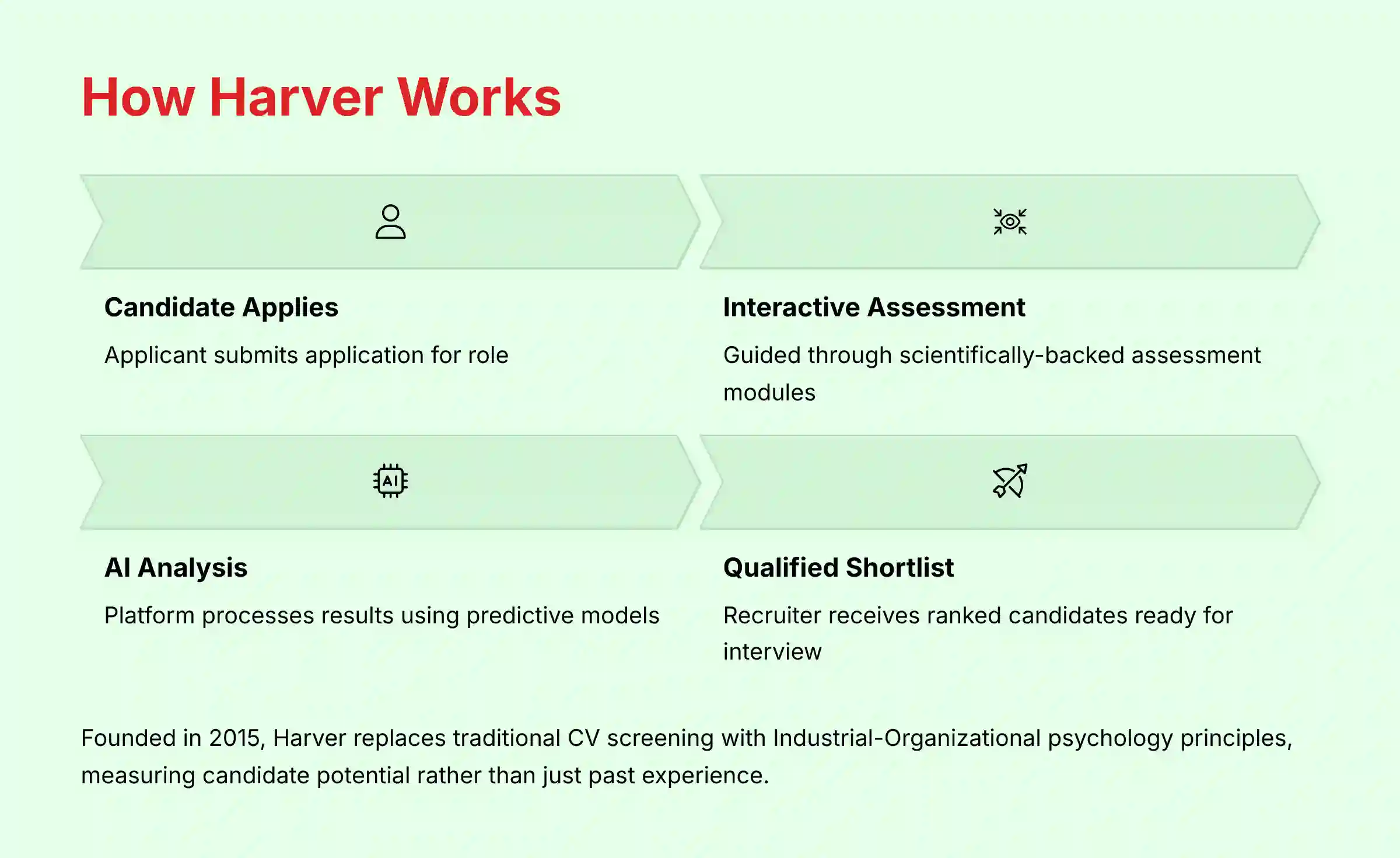
Harver is an AI-powered talent acquisition platform built for high-volume hiring. Founded in 2015, it replaces traditional resume screening with a series of predictive, scientifically-backed assessments to improve hiring quality and efficiency for enterprise companies.
The core idea is to measure a candidate’s potential for success, not just their past experience. This approach is particularly valuable for organizations looking to implement effective Best 10 AI for Talent Acquisition strategies in their recruitment workflow.
The process is straightforward. A candidate applies for a job and is immediately guided through an interactive assessment module. The platform then uses its AI model to analyze the data and provides the recruiter with a ranked shortlist of the most suitable candidates. This entire workflow is automated, saving recruiters significant time.
The platform’s methodology is a key differentiator. It is rooted in Industrial-Organizational (I-O) psychology, which is the scientific study of human behavior in the workplace. This approach makes the screening process more objective and fair compared to tools that simply match keywords on a resume.
The candidate journey works like this:
- The candidate applies for a role.
- They engage with a series of interactive assessment modules.
- Harver’s AI model processes the results.
- The recruiter receives a ranked shortlist of qualified candidates.
Core Platform Capabilities and Feature Groups
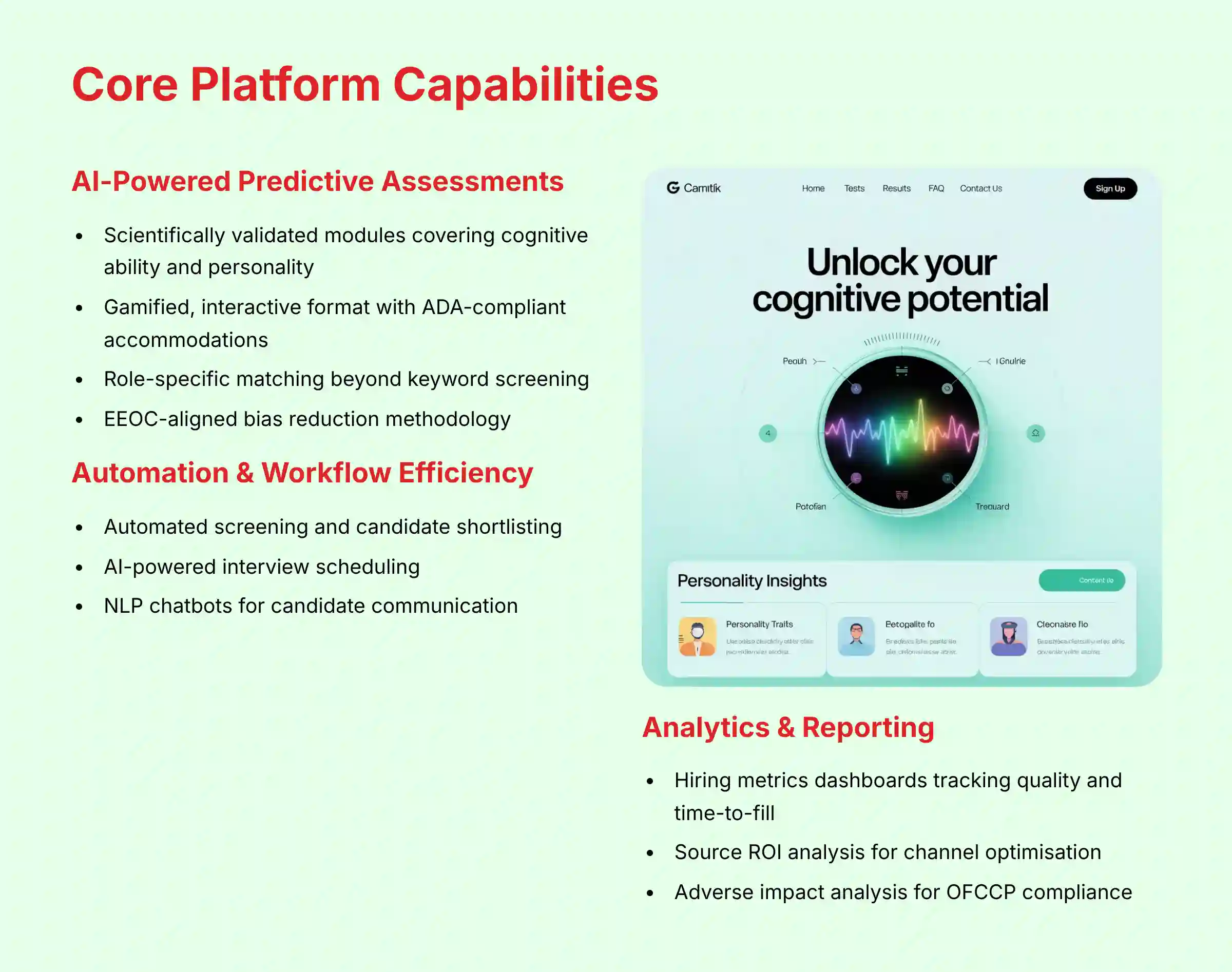
Harver groups its features to address the primary goals of modern talent acquisition: improving the quality and fairness of hires, increasing the speed of the process, and providing data-driven insights. These capabilities work together to create a complete system for high-volume recruitment.
AI-Powered Predictive Assessments for Quality and Fairness
The foundation of Harver is its library of assessments. These tools are designed to provide an objective measure of a candidate’s abilities and potential. The goal is to reduce hiring bias and select people who will perform well in the job.
- Scientifically Validated Modules: The platform includes a range of assessments covering cognitive ability, situational judgment, personality, and hard skills. Many of these modules are gamified, presenting challenges in an interactive format to improve engagement and reduce test-taker anxiety. The platform is also fully architected to provide ADA-compliant accommodations, ensuring equitable access for all candidates.
- Role-Specific Matching: AI models match candidate assessment results to performance predictors for a specific role, moving beyond simple keyword matching.
- Bias Reduction Methodology: By using standardized data points for every applicant, the platform ensures a fair and consistent evaluation process for all candidates. These assessments are developed in line with professional standards like the Uniform Guidelines on Employee Selection Procedures (UGESP) and align with EEOC guidelines, promoting algorithmic fairness by ensuring that assessment scores correlate with actual job performance through predictive validity.
Automation and Workflow Efficiency for Speed
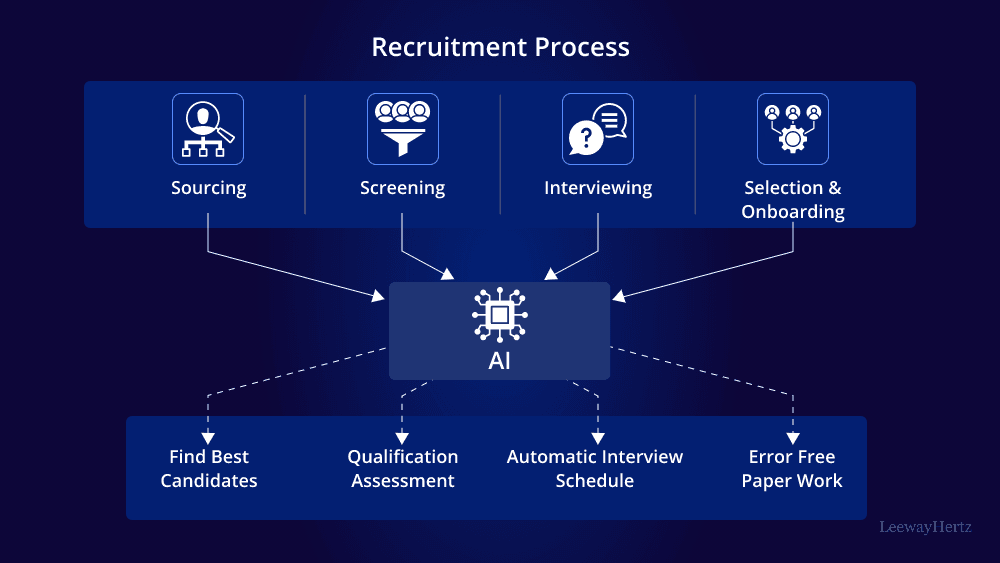
These features are designed to handle the manual, repetitive tasks of recruitment. This frees up recruiters to focus on engaging with the best candidates. It makes the entire hiring process faster and more efficient.
- Automated Screening: Automatically screens and shortlists candidates based on their assessment scores.
- Interview Scheduling: Automates the scheduling of interviews with candidates who meet the qualification standards.
- Candidate Communication: Uses AI chatbots powered by Natural Language Processing (NLP) and automated emails to keep candidates informed throughout the process.
Analytics and Reporting for Data-Driven Insights
Harver provides dashboards and reports to help HR leaders understand and improve their hiring process. This data gives clear insights into what is working and what is not. It allows for more strategic decisions based on facts, not feelings.
- Hiring Metrics Dashboards: Tracks key KPIs such as quality of hire, time-to-fill, and 90-day attrition rates.
- Source ROI Analysis: Includes a feature to identify which sourcing channels deliver the most successful hires.
- Adverse Impact Analysis: The platform provides analytics on hiring outcomes across different demographic groups. This tool helps legal and compliance teams monitor hiring processes for fairness and ensure compliance with regulations from bodies like the EEOC. It is particularly valuable for US federal contractors subject to OFCCP audits, as it monitors selection rates across demographic groups and can flag potential disparities that fall outside the “four-fifths rule,” providing an evidentiary basis for process validation.
Candidate Experience and Engagement Features
The platform includes features to make the application process more engaging for candidates. A positive experience can improve a company’s employer brand. It also helps manage candidate expectations from the very beginning.
- Engaging Digital Assessments: The tests are interactive and mobile-friendly, which helps keep candidates from dropping out.
- Realistic Job Previews: These modules give candidates a real feel for the job’s demands, helping them decide if the role is a good fit. For example, a contact center applicant might simulate a difficult customer call.
- Personalized Journeys: The application process can be customized based on the specific role and candidate profile.

Technical Specifications and System Architecture
Understanding the technical foundation of Harver is important for any IT or procurement professional considering the platform. These details cover its architecture, security, and the scientific methods behind its assessments. This information provides the proof behind the platform’s capabilities.
Platform and Hosting
Harver is built as a modern, cloud-based solution. This architecture makes it accessible and allows for flexible data management.
- Platform Type: It is a cloud-based, Software-as-a-Service (SaaS) platform.
- Accessibility: Users can access the platform through any modern web browser.
- Data Residency: It offers data residency options in the EU (Frankfurt, DE) and the US (North Virginia, US) to meet compliance needs.
AI Model Architecture and Algorithmic Transparency
Harver’s core predictive engine is built on a suite of machine learning algorithms trained on extensive performance data. While specific proprietary models are not disclosed, the architecture leverages predictive analytics to correlate assessment inputs with business outcomes like job performance and retention.
For features like candidate communication, the system employs Natural Language Processing (NLP) to power its chatbots.
Acknowledging industry concerns around the “black box” nature of AI, Harver emphasizes algorithmic transparency. This is achieved through detailed validation reports that explain which competencies are being measured and how they statistically link to the success profile for a given role, providing a defensible and logical foundation for hiring decisions.
Assessment Validation and Methodology
The platform’s assessments are built on established scientific principles. This table outlines the standards that ensure the tests are valid and job-relevant.
| Standard / Technique | Description |
|---|---|
| Compliance Standards | Developed according to UGESP and Society for Industrial and Organizational Psychology (SIOP) standards. |
| Criterion-Related Validity | Assessment scores are statistically linked to tangible job performance metrics. |
| Content Validity | Ensures assessment content is directly relevant to the tasks and duties of the specific job. |
| Construct Validity | Verifies that assessments accurately measure the intended psychological traits (e.g., conscientiousness). |
Security and Compliance Certifications
For any HR tool handling sensitive candidate data, security is a top priority. Harver holds several key certifications that demonstrate its commitment to data protection. These are standard requirements for enterprise software.
| Certification / Regulation | Status & Details |
|---|---|
| SOC 2 Type II | Holds a current annual attestation covering Security, Availability, and Confidentiality. |
| ISO/IEC 27001:2013 | Certified for its Information Security Management System (ISMS), which provides a systematic, risk-based approach to managing company and customer information. |
| GDPR | Fully compliant, offers Data Processing Agreements (DPAs). |
A SOC 2 Type II report is especially important. This proves a vendor has effective, long-term security controls in place for managing customer data. Organizations considering Harver or similar platforms should verify the currency of security certifications directly with the vendor, as certifications are regularly updated and specific versions can impact security posture.
Integration Capabilities and Ecosystem
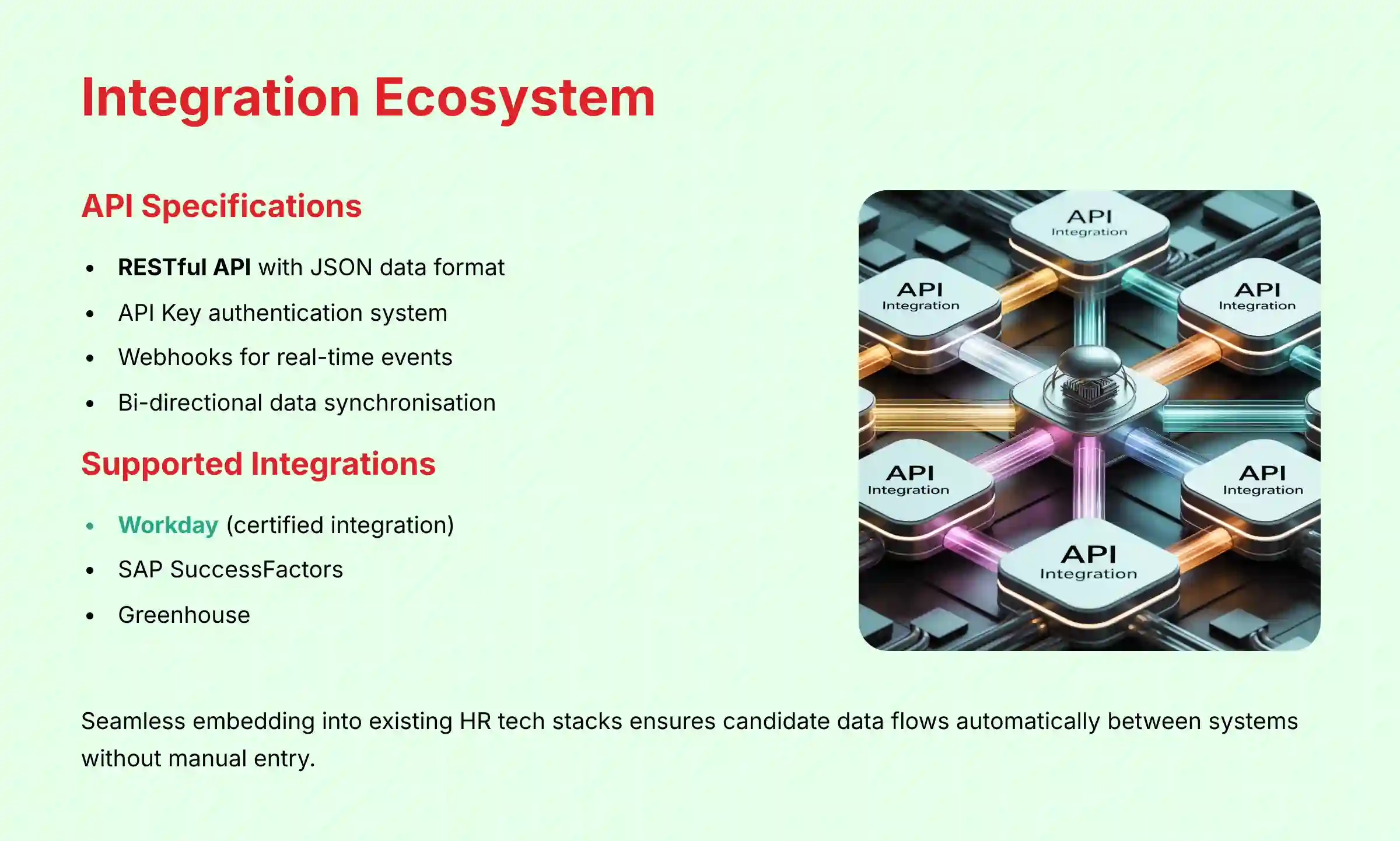
No HR tool works in isolation. Harver is designed to connect with other systems in a company’s HR technology stack. This ensures data flows smoothly and recruiters can work within their existing platforms.
API and Webhook Specifications
For IT teams and developers, Harver provides a modern API for building custom integrations. The specifications are designed for reliability and ease of use.
- API Type: RESTful API.
- Data Format: JSON for all API requests and responses.
- Authentication: Managed through a unique API Key.
- Key Endpoints: Includes endpoints for candidate management, requisition creation, and retrieving assessment results.
- Webhooks Support: Offers support for real-time events like
assessment.startedandassessment.completed.
Specific API version details and release timelines should be obtained from Harver’s official developer documentation or technical support to ensure you’re working with the most current specifications.
Supported ATS and HRIS Integrations
Harver is built to integrate with leading Applicant Tracking Systems (ATS) and Human Resource Information Systems (HRIS). A good integration acts like a digital handshake between Harver and the ATS. It makes sure candidate data passes between systems automatically.
This allows a company to embed Harver’s assessment workflow directly into the recruiter’s existing platform. Data flows back to the central system of record without manual entry. Crucially, these are not just one-way data pushes. The integrations support bi-directional data synchronization. For example, when a candidate completes an assessment in Harver, their status and score are automatically updated back in the ATS, creating a seamless workflow for recruiters.
Based on official documentation, Harver integrates with major systems such as:
- Workday (as a certified integration, which guarantees a higher level of reliability and support)
- SAP SuccessFactors
- Greenhouse
Harver Alternatives and Competitive Landscape
In the competitive AI talent assessment market, Harver is most frequently evaluated against other enterprise-focused platforms like HireVue, Pymetrics, and Modern Hire. For a comprehensive comparison, our Harver Top Alternatives and Competitors analysis provides detailed insights into these competitive platforms.
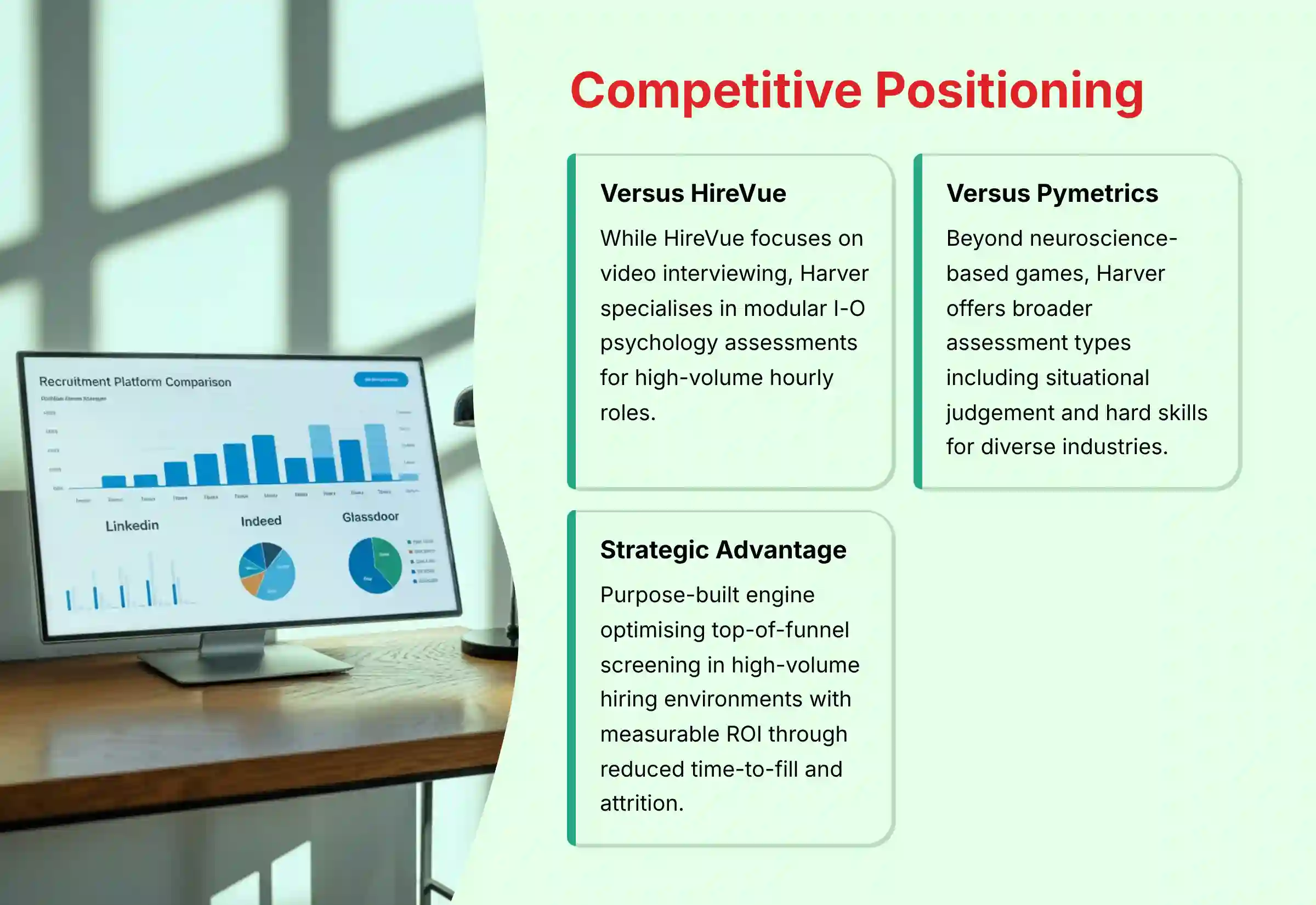
- Versus HireVue: While HireVue is heavily known for its video interviewing capabilities, Harver’s primary differentiator is its deep focus on a library of modular, I-O psychology-backed assessments specifically for high-volume, hourly roles.
- Versus Pymetrics: Pymetrics is known for its neuroscience-based gamified assessments. Harver differentiates by offering a broader suite of assessment types, including situational judgment tests and hard skills assessments, allowing for more tailored “success profiles” across diverse industries like BPO and retail.
Harver’s core strategic position is as a purpose-built engine for optimizing the top of the funnel in high-volume hiring environments.
Documented Use Cases and Industry Applications
Harver is designed for specific industries with high-volume hiring needs. The platform’s features are applied to solve the unique challenges these sectors face. The following examples show how the tool is used in practice.
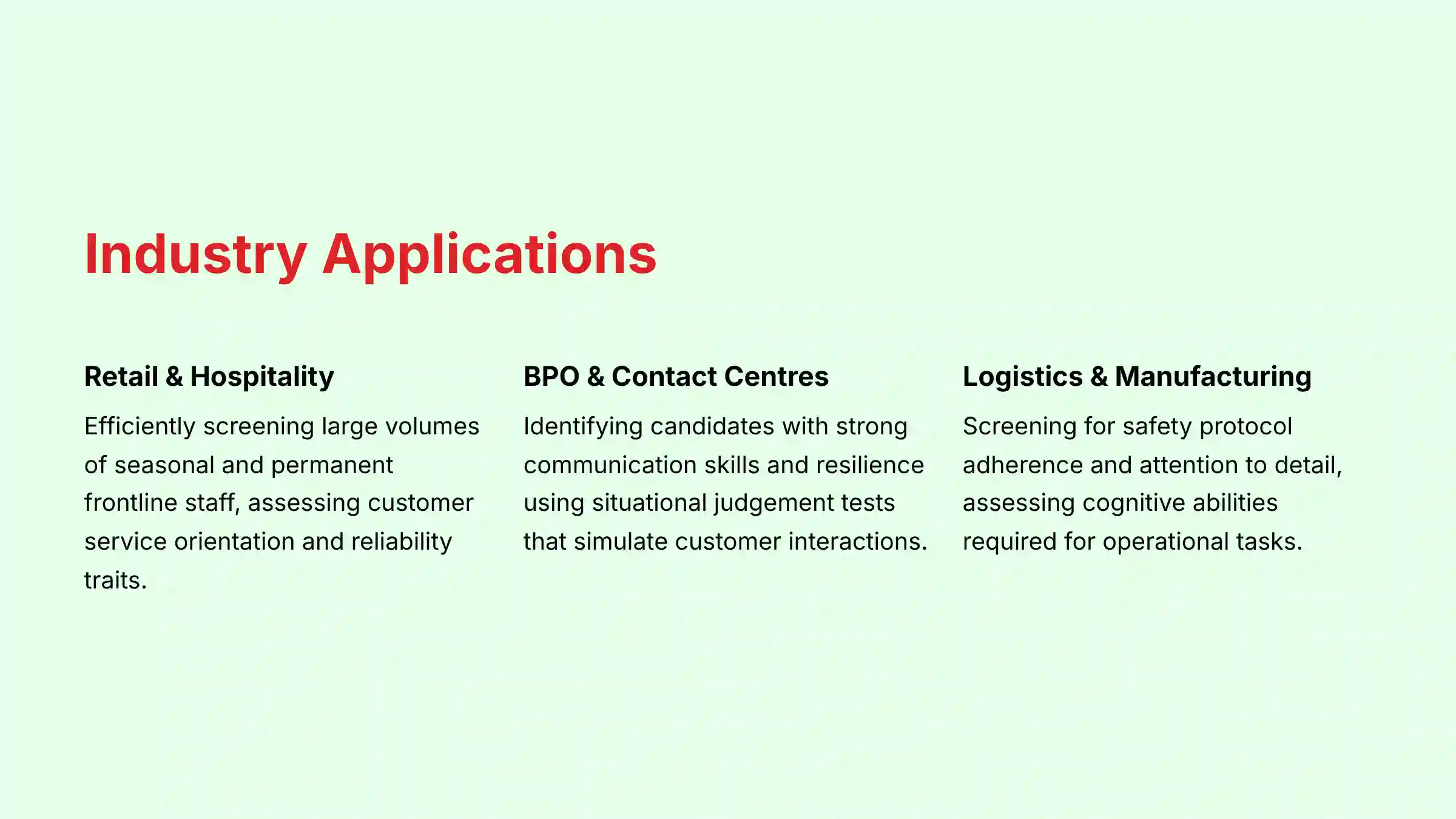
Application in Retail and Hospitality
These industries often hire large numbers of frontline staff and deal with high turnover. Harver helps them screen candidates efficiently. It focuses on finding people with the right traits for customer-facing roles.
- Efficiently screening and hiring large volumes of seasonal or permanent frontline staff.
- Assessing for traits like customer service orientation and reliability.
Application in BPO and Contact Centers
Contact centers have high attrition rates. Harver helps identify candidates with the soft skills needed to succeed and stay in the role. This reduces turnover and improves service quality.
- Identifying candidates with strong communication skills, resilience, and problem-solving abilities.
- Using situational judgment tests to simulate customer interactions.
Application in Logistics and Manufacturing
In these sectors, safety and reliability are critical. Harver helps screen for these traits in operational roles. It ensures new hires can follow protocols and perform tasks accurately.
- Screening for adherence to safety protocols and attention to detail.
- Assessing basic cognitive abilities required for operational tasks.
Pricing Structure and Plan Information
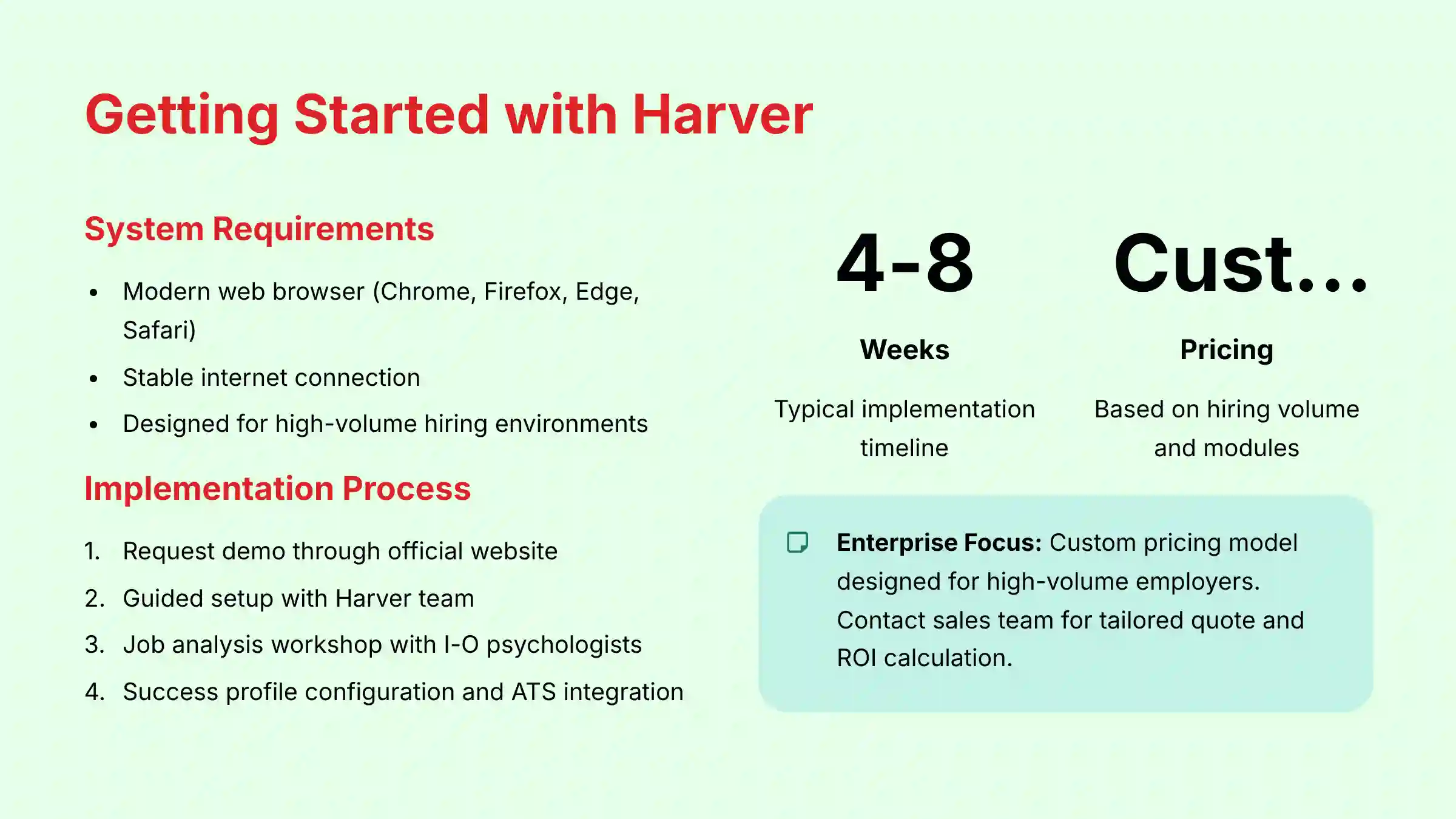
Harver uses a custom pricing model designed for its enterprise clients. The cost is not publicly listed and depends on several factors specific to each organization. This approach is common for enterprise-level software.
- Pricing Structure: Harver offers a custom pricing model.
- Key Factors: The final price is based on annual hiring volume, the number of roles, and the specific assessment modules used.
- Target Customer: The platform is built for enterprise-level and high-volume employers.
- Call to Action: Prospective customers must contact the Harver sales team directly for a tailored quote.
- Trial Availability: No free trial is advertised. A demo must be requested through their official website.
While a quote is required, the business case for Harver is typically built on a clear Return on Investment (ROI) calculation. This ROI is derived from measurable improvements in key HR metrics, such as:
- Reduced Time-to-Fill: By automating top-of-funnel screening.
- Lower 90-Day Attrition: By improving the quality of hire and role fit.
- Increased Recruiter Productivity: Freeing up recruiter time from manual resume reviews.
System Requirements and Getting Started
Here is the practical information you need to begin using Harver. This includes the technical requirements for users and the typical process for getting a new client set up on the platform.
User and System Requirements
The requirements for using Harver are minimal. The platform is designed to be accessible to both administrators and candidates without special software.
- Browser Requirements: Any modern web browser, such as Chrome, Firefox, Edge, or Safari.
- Connectivity: A stable internet connection is needed for both administrators and candidates taking assessments.
- Known Limitations: The platform is purpose-built for high-volume hiring. It may not be the right fit for low-volume, specialized executive recruitment.
Onboarding and Implementation Process
Getting started with Harver is a guided process. New clients work directly with the Harver team to configure the platform for their specific needs. There is no self-service option.
For detailed step-by-step guidance, our comprehensive Harver Tutorials and Usecase provides practical implementation insights and best practices.
- Account Creation: The process begins by requesting a demo through the official website.
- Guided Setup: The implementation is managed by the Harver team to ensure a smooth launch.
- Configuration: Key setup steps include configuring assessment modules, defining success profiles, and setting up ATS integrations.
The “success profile” configuration is a critical step. In this phase, the client works with Harver’s I-O psychologists in a structured job analysis workshop. This process defines the core skills and competency framework for a role.
This professional validation ensures the AI model’s candidate predictive scoring is correctly calibrated to the company’s unique performance benchmarks, forming the foundation of a robust talent intelligence strategy.
Organizations considering Harver should plan to dedicate resources from their HR and leadership teams to collaborate with Harver’s I-O psychology experts. The quality of this input directly impacts the validity and ROI of the assessments.
What Are the Most Frequently Asked Questions About Harver?
Here are answers to some of the most common questions about Harver. This section provides quick clarifications on its function, technology, and use cases. For more detailed answers, visit our comprehensive Harver FAQs section.
Is Harver an Applicant Tracking System (ATS)?
No, Harver is not an ATS. It is a pre-employment assessment platform designed to integrate with an ATS. It replaces the top-of-funnel screening process, passing qualified candidates into the existing ATS workflow for recruiters to manage.
What Scientific Principles Does Harver Use for Assessments?
Harver’s methodology is based on Industrial-Organizational (I-O) psychology. Its assessments are validated using established scientific techniques like criterion-related and content validity. This ensures the tests are job-relevant and predictive of on-the-job performance.
How Does Harver Help Reduce Hiring Bias?
Harver helps reduce bias by replacing subjective resume reviews with objective, structured data from assessments. This standardized approach ensures every candidate is evaluated against the same job-relevant criteria, promoting algorithmic fairness.
The platform’s methodology is rooted in predictive validity—ensuring that assessment scores correlate with actual job performance. This provides a data-driven, defensible hiring process that aligns with the spirit of EEOC guidelines.
What Specific Security Certifications Does Harver Hold?
Harver holds SOC 2 Type II and ISO/IEC 27001:2013 certifications. It is also fully GDPR compliant. These certifications demonstrate a strong commitment to enterprise-grade security and data privacy.
Can Harver Be Used for Internal Mobility and Hiring?
Yes, it can. While it is primarily used for external hiring, the assessment modules can be configured to evaluate existing employees. This helps organizations make objective, data-driven decisions about promotions and internal role changes.
Does Harver Integrate With Workday?
Yes, it does. Harver offers a certified, pre-built integration with Workday. This connection allows candidate data and assessment results to flow seamlessly between the two systems, creating a unified workflow.
What Is the Typical Implementation Time for Harver?
The implementation timeline can vary. It depends on the complexity of the project, including the number of roles and the specific ATS integration required. A typical range for this type of enterprise software is between 4 to 8 weeks, but a precise timeline is provided during the sales process.
How Is the Adverse Impact Dashboard Used for Compliance?
The dashboard provides anonymized analytics on hiring outcomes across different demographic groups. Its purpose is to allow HR and legal teams to monitor their hiring processes for fairness. This helps them ensure compliance with regulations from bodies like the EEOC.
Disclaimer
Disclaimer: The information about Harver presented in this article reflects our thorough analysis as of 2025. Given the rapid pace of AI technology evolution in the HR and recruiting space, features, pricing, and specifications may change after publication.
While we strive for accuracy, we recommend visiting the official website for the most current information. The implementation of any AI-powered HR technology carries significant operational and legal considerations. You should consult with your organization’s legal, IT security, and HR compliance professionals to validate that the tool aligns with your specific policies and regulatory requirements.

Leave a Reply